
Previous Next

Experiencing The Creator Through The Guru Only

Sri Guru Granth SahibSikhi settles well only with the Guru’s thought that binds and guides its course; any thought other than the Guru’s words has no meaning in the Sikhi. Any effect of science or modern culture used while understanding the Gurbani will literally become a misgiving. In the past, many people have tried to interpret the Gurbani by making the Vedas and other old scriptures a source of understanding it, but it is a big mistake. The Guru has experienced the ultimate reality, the Creator, and he has shared it with his followers. To fortify the reality of the experience, the Guru has added in Sri Guru Granth Sahib the bani of those devotees of Akalpurakh, who indeed had the same experience. As per their writings, none of them finds the old scriptures truly a right path to realize Him. Obviously the earlier interpretations like of Freedkoti Wala Teeka do not justify the authentic approach of the Guru. In the same way, any interpretation under the influence of modern culture is nothing but a fallacy. New meanings given to words like “Antkaal, Janam Maran, Garbh Joni” are absolutely incorrect and misleading, because their application doesn’t go right in all contexts discussed in the Gurbani. Just for an example, the new meaning-givers take “joni” as “ the different stages of the mind”, but when “Joni” is used for Akalpurakh, they take its meaning as “birth”; therefore, they cannot have both ways. The reason of what I have stated above is simple: The Guru’s path is personal experience and to go through such experience, only the Guru’s guidance is mandatory not the old scriptures or any effect of science or modern culture.

               First Nanak’s following Ashtpadee, on 1040 to 1041, Sri Guru Granth Sahib in Raag Soohi, stresses on following none but the Guru. Let us go through it leaving behind our load of academic achievements:

ਮਾਰੂ ਮਹਲਾ ੧ ॥ ਸਚੁ ਕਹਹੁ ਸਚੈ ਘਰਿ ਰਹਣਾ ॥

ਜੀਵਤ ਮਰਹੁ ਭਵਜਲੁ ਜਗੁ ਤਰਣਾ ॥

ਗੁਰੁ ਬੋਹਿਥੁ ਗੁਰੁ ਬੇੜੀ ਤੁਲਹਾ ਮਨ ਹਰਿ ਜਪਿ ਪਾਰਿ ਲੰਘਾਇਆ ॥੧॥

Maaroo mehlaa 1.

Sach kahhu sachai ghar rahnaa.

Jeevat marahu bhavjal jag tarnaa.

Gur bohith gur bayrhee tulhaa man har jap paar langhaa-i-aa. ||1||

In essence: Praise Akalpurakh if you want to be with Him; if you want to swim across the dreadful worldly ocean, live without self-conceit. The Guru is the Ship, boat and raft; it is the Guru, who ferries across the worldly ocean through remembering Akalpurakh ‘s name.

               The guiding force that unites the mortal with the eternal Creator is the Guru; the Guru’s inspiration to indulge in His memory saves the seeker from drowning in the worldly Maya pursuits. One step towards the Maya-bound goals simply negates the all-good efforts to walk on the Guru’s path. Making a living honestly right in this world and living in His memory separate the Sikhi from all other faiths.

(ਹੇ ਭਾਈ!) ਸਦਾ-ਥਿਰ ਰਹਿਣ ਵਾਲੇ ਪਰਮਾਤਮਾ ਦਾ ਨਾਮ ਸਿਮਰੋ, (ਸਿਮਰਨ ਦੀ ਬਰਕਤਿ ਨਾਲ ਉਸ) ਸਦਾ-ਥਿਰ ਪ੍ਰਭੂ ਦੀ ਹਜ਼ੂਰੀ ਵਿਚ ਥਾਂ ਮਿਲੀ ਰਹੇਗੀ, ਜੀਵਨ-ਸਫ਼ਰ ਵਿਚ ਵਿਕਾਰਾਂ ਦੇ ਹੱਲੇ ਤੋਂ ਬਚੇ ਰਹੋਗੇ, ਤੇ ਸੰਸਾਰ-ਸਮੁੰਦਰ ਤੋਂ ਪਾਰ ਲੰਘ ਜਾਵੋਗੇ। ਹੇ ਮਨ! (ਸੰਸਾਰ-ਸਮੁੰਦਰ ਤੋਂ ਪਾਰ ਲੰਘਣ ਲਈ) ਗੁਰੂ ਜਹਾਜ਼ ਹੈ, ਗੁਰੂ ਬੇੜੀ ਹੈ, ਗੁਰੂ ਤੁਲਹਾ ਹੈ, (ਗੁਰੂ ਦੀ ਸਰਨ ਪੈ ਕੇ) ਹਰਿ-ਨਾਮ ਜਪ, (ਜਿਸ ਜਿਸ ਨੇ ਜਪਿਆ ਹੈ ਗੁਰੂ ਨੇ ਉਸ ਨੂੰ) ਪਾਰ ਲੰਘਾ ਦਿੱਤਾ ਹੈ।੧।

ਹਉਮੈ ਮਮਤਾ ਲੋਭ ਬਿਨਾਸਨੁ ॥

ਨਉ ਦਰ ਮੁਕਤੇ ਦਸਵੈ ਆਸਨੁ ॥

ਊਪਰਿ ਪਰੈ ਪਰੈ ਅਪਰੰਪਰੁ ਜਿਨਿ ਆਪੇ ਆਪੁ ਉਪਾਇਆ ॥੨॥

Ha-umai mamtaa lobh binaasan.

Na-o dar muktay dasvai aasan.

Oopar parai parai aprampar jin aapay aap upaa-i-aa. ||2||

Akalpurakh’s Naam eradicates one’s self-conceit, worldly love and greed; through His Naam, one rises above the influence of the negative attitude of one’s guiding forces (nine doors) within and becomes stilled in the tenth door. The infinite Creator, who has manifested Himself through His creation, becomes visible in that tenth gate.

               As the seeker indulges in His name praise, his deep attachment to the worldly attractions, greed and self-conceit just go away Then as his mind settles in peace; it gets absorbed in His memory, where He is seen manifested.

ਪਰਮਾਤਮਾ ਦਾ ਨਾਮ ਹਉਮੈ ਮਮਤਾ ਤੇ ਲੋਭ ਦਾ ਨਾਸ ਕਰਨ ਵਾਲਾ ਹੈ, (ਨਾਮ ਸਿਮਰਨ ਦੀ ਬਰਕਤਿ ਨਾਲ) ਸਰੀਰ ਦੀਆਂ ਨੌ ਗੋਲਕਾਂ ਦੇ ਵਿਸ਼ਿਆਂ ਤੋਂ ਖ਼ਲਾਸੀ ਮਿਲੀ ਰਹਿੰਦੀ ਹੈ, ਸੁਰਤਿ ਦਸਵੇਂ ਦੁਆਰ ਵਿਚ ਟਿਕੀ ਰਹਿੰਦੀ ਹੈ (ਭਾਵ, ਦਸਵੇਂ ਦੁਆਰ ਦੀ ਰਾਹੀਂ ਪਰਮਾਤਮਾ ਨਾਲ ਸੰਬੰਧ ਬਣਿਆ ਰਹਿੰਦਾ ਹੈ)। ਜਿਸ ਪਰਮਾਤਮਾ ਨੇ ਆਪਣੇ ਆਪ ਨੂੰ (ਸ੍ਰਿਸ਼ਟੀ ਦੇ ਰੂਪ ਵਿਚ) ਪਰਗਟ ਕੀਤਾ ਹੈ ਜੋ ਪਰੇ ਤੋਂ ਪਰੇ ਹੈ ਤੇ ਬੇਅੰਤ ਹੈ ਉਹ ਉਸ ਦਸਮ ਦੁਆਰ ਵਿਚ ਪ੍ਰਤੱਖ ਹੋ ਜਾਂਦਾ ਹੈ।੨।

ਗੁਰਮਤਿ ਲੇਵਹੁ ਹਰਿ ਲਿਵ ਤਰੀਐ ॥

ਅਕਲੁ ਗਾਇ ਜਮ ਤੇ ਕਿਆ ਡਰੀਐ ॥

ਜਤ ਜਤ ਦੇਖਉ ਤਤ ਤਤ ਤੁਮ ਹੀ ਅਵਰੁ ਨ ਦੁਤੀਆ ਗਾਇਆ ॥੩॥

Gurmat layvhu har liv taree-ai.

Akal gaa-ay jam tay ki-aa daree-ai.

Jat jat daykh-a-u tat tat tum hee avar na dutee-aa gaa-i-aa. ||3||

Seek the Guru’s teachings to swim across the worldly ocean. Why one needs to be feared from death when one sings the praises of Prabh, the absolute one? Oh Prabh! Wherever I look, I see you. There is none other but you; I will sing your praises.

               Praising Prabh makes the seeker fearless. In His memory, the seeker sees Him manifested everywhere. Singing His praises becomes one’s way of life.

(ਹੇ ਭਾਈ!) ਗੁਰੂ ਦੀ ਮਤਿ ਗ੍ਰਹਿਣ ਕਰੋ (ਗੁਰੂ ਦੀ ਮਤਿ ਦੀ ਰਾਹੀਂ) ਪਰਮਾਤਮਾ ਵਿਚ ਸੁਰਤਿ ਜੋੜਿਆਂ ਸੰਸਾਰ-ਸਮੁੰਦਰ ਤੋਂ ਪਾਰ ਲੰਘ ਜਾਈਦਾ ਹੈ। (ਇਕ-ਰਸ ਵਿਆਪਕ) ਅਖੰਡ ਪ੍ਰਭੂ ਦੀ ਸਿਫ਼ਤਿ-ਸਾਲਾਹ ਕੀਤਿਆਂ ਜਮ ਤੋਂ ਡਰਨ ਦੀ ਲੋੜ ਨਹੀਂ ਰਹਿ ਜਾਂਦੀ। (ਹੇ ਪ੍ਰਭੂ! ਇਹ ਤੇਰੇ ਸਿਮਰਨ ਦਾ ਹੀ ਸਦਕਾ ਹੈ ਕਿ) ਮੈਂ ਜਿਧਰ ਜਿਧਰ ਵੇਖਦਾ ਹਾਂ ਉਧਰ ਉਧਰ ਤੂੰ ਹੀ ਤੂੰ ਦਿੱਸਦਾ ਹੈਂ। ਮੈਨੂੰ ਤੇਰੇ ਵਰਗਾ ਕੋਈ ਹੋਰ ਨਹੀਂ ਦਿੱਸਦਾ, ਮੈਂ ਤੇਰੀ ਹੀ ਸਿਫ਼ਤਿ-ਸਾਲਾਹ ਕਰਦਾ ਹਾਂ।੩।

ਸਚੁ ਹਰਿ ਨਾਮੁ ਸਚੁ ਹੈ ਸਰਣਾ ॥

ਸਚੁ ਗੁਰ ਸਬਦੁ ਜਿਤੈ ਲਗਿ ਤਰਣਾ ॥

ਅਕਥੁ ਕਥੈ ਦੇਖੈ ਅਪਰੰਪਰੁ ਫੁਨਿ ਗਰਭਿ ਨ ਜੋਨੀ ਜਾਇਆ ॥੪॥

Sach har naam sach hai sarnaa.

Sach gur sabad jitai lag tarnaa.

Akath kathai daykhai aprampar fun garabh na jonee jaa-i-aa. ||4||

Har’s Naam is eternal and so is the refuge of His Naam; the Shabada of Guru is also forever; by attaching to it, one swims across the dreadful worldly ocean. One, who praises the infinite Creator, doesn’t enter into mother’s womb again.

               By taking refuge of the eternal name of the Creator, one rises above the worldly Maya load and ferries across it intact. This way, no more womb-birth remains to experience.

ਪਰਮਾਤਮਾ ਦਾ ਨਾਮ ਸਦਾ-ਥਿਰ ਰਹਿਣ ਵਾਲਾ ਹੈ, ਉਸ ਦਾ ਆਸਰਾ-ਪਰਨਾ ਭੀ ਸਦਾ-ਥਿਰ ਰਹਿਣ ਵਾਲਾ ਹੈ। ਗੁਰੂ ਦਾ ਸ਼ਬਦ (ਭੀ) ਸਦਾ-ਥਿਰ ਰਹਿਣ ਵਾਲਾ (ਵਸੀਲਾ ਹੈ), ਸ਼ਬਦ ਵਿਚ ਜੁੜ ਕੇ ਹੀ ਸੰਸਾਰ-ਸਮੁੰਦਰ ਤੋਂ ਪਾਰ ਲੰਘੀਦਾ ਹੈ। ਪਰਮਾਤਮਾ ਦਾ ਸਰੂਪ ਬਿਆਨ ਤੋਂ ਪਰੇ ਹੈ, ਜੋ ਮਨੁੱਖ ਉਸ ਪਰੇ ਤੋਂ ਪਰੇ ਪਰਮਾਤਮਾ ਦੀ ਸਿਫ਼ਤਿ-ਸਾਲਾਹ ਕਰਦਾ ਹੈ ਉਹ ਉਸ ਦਾ ਦਰਸ਼ਨ ਕਰ ਲੈਂਦਾ ਹੈ, ਉਹ ਮਨੁੱਖ ਫਿਰ ਗਰਭ-ਜੋਨਿ ਵਿਚ ਨਹੀਂ ਆਉਂਦਾ।੪।

ਸਚ ਬਿਨੁ ਸਤੁ ਸੰਤੋਖੁ ਨ ਪਾਵੈ ॥

ਬਿਨੁ ਗੁਰ ਮੁਕਤਿ ਨ ਆਵੈ ਜਾਵੈ ॥

ਮੂਲ ਮੰਤ੍ਰੁ ਹਰਿ ਨਾਮੁ ਰਸਾਇਣੁ ਕਹੁ ਨਾਨਕ ਪੂਰਾ ਪਾਇਆ ॥੫॥

Sach bin sat santokh na paavai.

Bin gur mukat na aavai jaavai.

Mool mantar har naam rasaa-in kaho naanak pooraa paa-i-aa. ||5||

Without Akalpurakh, no one obtains purity and contentment; without the Guru, one doesn’t get liberation; therefore, one comes and goes. Oh Nanak! Har’s Naam is the Mool mantra and source of all essences. By meditating on Har’s Naam, He, the perfect one, is obtained.

               Without realizing Akalpurakh, one never gets satiated with anything; to get connected to Akalpurakh, one needs the Guru’s guidance, because one’s own efforts may get tainted with the outer influences. Through the Guru, remembering His name becomes medicine-mantra.

ਸਦਾ-ਥਿਰ ਪ੍ਰਭੂ ਦਾ ਨਾਮ ਸਿਮਰਨ ਤੋਂ ਬਿਨਾ (ਕੋਈ ਮਨੁੱਖ ਦੂਜਿਆਂ ਦੀ) ਸੇਵਾ ਤੇ ਸੰਤੋਖ (ਦਾ ਆਤਮਕ ਗੁਣ) ਪ੍ਰਾਪਤ ਨਹੀਂ ਕਰ ਸਕਦਾ। ਗੁਰੂ ਦੀ ਸਰਨ ਤੋਂ ਬਿਨਾ ਵਿਕਾਰਾਂ ਤੋਂ ਖ਼ਲਾਸੀ ਨਹੀਂ ਮਿਲਦੀ, ਮਨੁੱਖ ਜਨਮ ਮਰਨ ਦੇ ਗੇੜ ਵਿਚ ਪਿਆ ਰਹਿੰਦਾ ਹੈ। ਹੇ ਨਾਨਕ! ਹਰੀ ਦਾ ਨਾਮ ਸਿਮਰ ਜੋ ਸਭ ਮੰਤ੍ਰਾਂ ਦਾ ਮੂਲ ਹੈ ਤੇ ਜੋ ਸਭ ਰਸਾਂ ਦਾ ਸੋਮਾ ਹੈ। (ਜੇਹੜਾ ਮਨੁੱਖ ਗੁਰੂ ਦੀ ਸਰਨ ਪੈ ਕੇ ਨਾਮ ਸਿਮਰਦਾ ਹੈ) ਉਸ ਨੂੰ ਪੂਰਨ ਪ੍ਰਭੂ ਮਿਲ ਪੈਂਦਾ ਹੈ।੫।

ਸਚ ਬਿਨੁ ਭਵਜਲੁ ਜਾਇ ਨ ਤਰਿਆ ॥

ਏਹੁ ਸਮੁੰਦੁ ਅਥਾਹੁ ਮਹਾ ਬਿਖੁ ਭਰਿਆ ॥

ਰਹੈ ਅਤੀਤੁ ਗੁਰਮਤਿ ਲੇ ਊਪਰਿ ਹਰਿ ਨਿਰਭਉ ਕੈ ਘਰਿ ਪਾਇਆ ॥੬॥

Sach bin bhavjal jaa-ay na tari-aa.

Ayhu samund athaahu mahaa bikh bhari-aa.

Rahai ateet gurmat lay oopar har nirbha-o kai ghar paa-i-aa. ||6||

This worldly dreadful ocean is filled with the Maya-poison, and without Har’s Naam, it cannot be swum across. One, who remains above this Maya poison through the Guru’s shabda, finds Har, the fearless, within.

               Without falling in love with the Creator, it is difficult to negate the forceful negativity of the Maya; nonetheless, in His love, one remains detached to all kinds of Maya attractions and eventually becomes one with Him.

ਇਹ ਸੰਸਾਰ-ਸਮੁੰਦਰ ਬਹੁਤ ਹੀ ਡੂੰਘਾ ਹੈ ਤੇ (ਵਿਕਾਰਾਂ ਦੇ) ਜ਼ਹਿਰ ਨਾਲ ਭਰਿਆ ਹੋਇਆ ਹੈ। ਸਦਾ-ਥਿਰ ਪਰਮਾਤਮਾ ਦਾ ਨਾਮ ਸਿਮਰਨ ਤੋਂ ਬਿਨਾ ਇਸ ਵਿਚੋਂ ਪਾਰ ਨਹੀਂ ਲੰਘ ਸਕੀਦਾ। ਜੇਹੜਾ ਮਨੁੱਖ ਗੁਰੂ ਦੀ ਮਤਿ ਲੈਂਦਾ ਹੈ ਉਹ ਵਿਕਾਰਾਂ ਤੋਂ ਨਿਰਲੇਪ ਰਹਿੰਦਾ ਹੈ ਉਹ ਜ਼ਹਿਰ-ਭਰੇ ਸਮੁੰਦਰ ਤੋਂ ਉਤਾਂਹ ਉਤਾਂਹ ਰਹਿੰਦਾ ਹੈ, ਉਸ ਨੂੰ ਪਰਮਾਤਮਾ ਲੱਭ ਪੈਂਦਾ ਹੈ ਤੇ ਉਹ ਅਜੇਹੇ (ਆਤਮਕ) ਟਿਕਾਣੇ ਵਿਚ ਪਹੁੰਚ ਜਾਂਦਾ ਹੈ ਜਿਥੇ ਉਹ ਵਿਕਾਰਾਂ ਦੇ ਡਰ-ਸਹਿਮ ਤੋਂ ਪਰੇ ਹੋ ਜਾਂਦਾ ਹੈ।੬।

ਝੂਠੀ ਜਗ ਹਿਤ ਕੀ ਚਤੁਰਾਈ ॥

ਬਿਲਮ ਨ ਲਾਗੈ ਆਵੈ ਜਾਈ ॥

ਨਾਮੁ ਵਿਸਾਰਿ ਚਲਹਿ ਅਭਿਮਾਨੀ ਉਪਜੈ ਬਿਨਸਿ ਖਪਾਇਆ ॥੭॥

Jhoothee jag hit kee chaturaa-ee.

Bilam na laagai aavai jaa-ee.

Naam visaar chaleh abhimaanee upjai binas khapaa-i-aa. ||7||

The worldly love and cleverness are false and short-lived and because of these, the mortals come and go. The self-conceited persons depart from here forgetting His Naam; they take birth and die. Thus they keep suffering.

               The worldly cleverness and wisdom are not useful in realizing Akalpurakh. Indeed those ones are conceited ones, who depart from here forgetting Him.

ਜਗਤ ਦੇ (ਪਦਾਰਥਾਂ ਦੇ) ਮੋਹ ਦੀ ਸਿਆਣਪ ਵਿਅਰਥ ਹੀ ਜਾਂਦੀ ਹੈ ਕਿਉਂਕਿ (ਜਗਤ ਦੀ ਮਾਇਆ ਦਾ ਸਾਥ ਮੁੱਕਦਿਆਂ) ਰਤਾ ਚਿਰ ਨਹੀਂ ਲੱਗਦਾ ਤੇ ਮਨੁੱਖ ਇਸ ਮੋਹ ਦੇ ਕਾਰਨ ਜਨਮ ਮਰਨ ਵਿਚ ਪੈ ਜਾਂਦਾ ਹੈ। ਮਾਇਆ ਦਾ ਮਾਣ ਕਰਨ ਵਾਲੇ ਬੰਦੇ ਪਰਮਾਤਮਾ ਦਾ ਨਾਮ ਭੁਲਾ ਕੇ (ਇਥੋਂ ਖ਼ਾਲੀ ਹੱਥ) ਤੁਰ ਪੈਂਦੇ ਹਨ। (ਜੋ ਭੀ ਪ੍ਰਭੂ ਦਾ ਨਾਮ ਵਿਸਾਰਦਾ ਹੈ ਉਹ) ਜੰਮਦਾ ਹੈ ਮਰਦਾ ਹੈ ਜੰਮਦਾ ਹੈ ਮਰਦਾ ਹੈ ਤੇ ਖ਼ੁਆਰ ਹੁੰਦਾ ਹੈ।੭।

ਉਪਜਹਿ ਬਿਨਸਹਿ ਬੰਧਨ ਬੰਧੇ ॥

ਹਉਮੈ ਮਾਇਆ ਕੇ ਗਲਿ ਫੰਧੇ ॥

ਜਿਸੁ ਰਾਮ ਨਾਮੁ ਨਾਹੀ ਮਤਿ ਗੁਰਮਤਿ ਸੋ ਜਮ ਪੁਰਿ ਬੰਧਿ ਚਲਾਇਆ ॥੮॥

Upjahi binsahi bandhan bandhay.

Ha-umai maa-i-aa kay gal fandhay.

Jis raam naam naahee mat gurmat so jam pur bandh chalaa-i-aa. ||8||

People come and go because of the worldly bonds; they have chained in self-conceit and Maya. The death drags (scares) that person, who doesn’t obtain Akalpurakh’s Naam through the Guru.

               One’s self-conceit and attachment of Maya becomes bonds, which trigger birth and death; obviously those who do not get attached to His name face the death in fear.

ਜਿਨ੍ਹਾਂ ਬੰਦਿਆਂ ਦੇ ਗਲ ਵਿਚ ਹਉਮੈ ਤੇ ਮਾਇਆ ਦੇ ਮੋਹ ਦੇ ਫਾਹੇ ਪਏ ਰਹਿੰਦੇ ਹਨ, ਉਹ ਇਹਨਾਂ ਬੰਧਨਾਂ ਵਿਚ ਬੱਝੇ ਹੋਏ ਜਨਮ ਮਰਨ ਦੇ ਗੇੜ ਵਿਚ ਪਏ ਰਹਿੰਦੇ ਹਨ। ਜਿਸ ਮਨੁੱਖ ਨੂੰ ਸਤਿਗੁਰੂ ਦੀ ਮਤਿ ਦੀ ਰਾਹੀਂ ਪਰਮਾਤਮਾ ਦਾ ਨਾਮ ਪ੍ਰਾਪਤ ਨਹੀਂ ਹੋਇਆ, ਉਸ ਮੋਹ ਦੇ ਬੰਧਨਾਂ ਵਿਚ ਬੱਝ ਕੇ ਜਮ ਦੇ ਸ਼ਹਿਰ ਵਿਚ ਧੱਕਿਆ ਜਾਂਦਾ ਹੈ।੮।

ਗੁਰ ਬਿਨੁ ਮੋਖ ਮੁਕਤਿ ਕਿਉ ਪਾਈਐ ॥

ਬਿਨੁ ਗੁਰ ਰਾਮ ਨਾਮੁ ਕਿਉ ਧਿਆਈਐ ॥

ਗੁਰਮਤਿ ਲੇਹੁ ਤਰਹੁ ਭਵ ਦੁਤਰੁ ਮੁਕਤਿ ਭਏ ਸੁਖੁ ਪਾਇਆ ॥੯॥

Gur bin mokh mukat ki-o paa-ee-ai.

Bin gur raam naam ki-o Dhi-aa-ee-ai.

Gurmat layho tarahu bhav dutar mukat bha-ay sukh paa-i-aa. ||9||

Without the Guru, the bonds of Maya are not shattered; thus liberation doesn’t occur. Without the Guru, Akalpurakh’s Naam is not contemplated. Therefore, take the Guru’s guidance and swim across the dreadful worldly ocean and get liberation and peace.

               The Guru is very important to get rid of the negative influences of Maya and without the Guru, one doesn’t learn how to get involved in His name; therefore, taking the Guru’s refuge is mandatory.

ਗੁਰੂ ਦੀ ਸਰਨ ਤੋਂ ਬਿਨਾ (ਹਉਮੈ ਮਾਇਆ ਦੇ ਬੰਧਨਾਂ ਤੋਂ) ਖ਼ਲਾਸੀ ਕਿਸੇ ਭੀ ਹਾਲਤ ਵਿਚ ਨਹੀਂ ਮਿਲ ਸਕਦੀ, ਕਿਉਂਕਿ ਗੁਰੂ ਦੀ ਸਰਨ ਆਉਣ ਤੋਂ ਬਿਨਾ ਪਰਮਾਤਮਾ ਦਾ ਨਾਮ ਸਿਮਰਿਆ ਨਹੀਂ ਜਾ ਸਕਦਾ। (ਹੇ ਭਾਈ!) ਗੁਰੂ ਦੀ ਮਤਿ ਤੇ ਤੁਰ ਕੇ (ਨਾਮ ਸਿਮਰੋ, ਇਸ ਤਰ੍ਹਾਂ) ਉਸ ਸੰਸਾਰ-ਸਮੁੰਦਰ ਵਿਚੋਂ ਪਾਰ ਲੰਘ ਜਾਵੋਗੇ ਜਿਸ ਵਿਚੋਂ ਪਾਰ ਲੰਘਣਾ ਬਹੁਤ ਹੀ ਔਖਾ ਹੈ। ਜੇਹੜੇ ਬੰਦੇ (ਨਾਮ ਸਿਮਰ ਕੇ) ਵਿਕਾਰਾਂ ਵਿਚੋਂ ਬੱਚ ਨਿਕਲੇ ਉਹਨਾਂ ਨੂੰ ਆਤਮਕ ਆਨੰਦ ਪ੍ਰਾਪਤ ਹੋ ਗਿਆ।੯।

ਗੁਰਮਤਿ ਕ੍ਰਿਸਨਿ ਗੋਵਰਧਨ ਧਾਰੇ ॥

ਗੁਰਮਤਿ ਸਾਇਰਿ ਪਾਹਣ ਤਾਰੇ ॥

ਗੁਰਮਤਿ ਲੇਹੁ ਪਰਮ ਪਦੁ ਪਾਈਐ ਨਾਨਕ ਗੁਰਿ ਭਰਮੁ ਚੁਕਾਇਆ ॥੧੦॥

Gurmat krisan govardhan Dhaaray.

Gurmat saa-ir paahan taaray.

Gurmat layho param pad paa-ee-ai naanak gur bharam chukaa-i-aa. ||10||

Through the Guru’s guidance, Krishna lifted Goverdhan Mountain; through the Guru’s guidance, Ram Chander made the stones float; therefore, follow the Guru’s guidance and obtain the supreme status. Oh Nanak! The Guru dispels doubt

               The Guru is not verifying any story but simply saying that it is the Guru, who helped people like Krishan and Ram Chander in the past; therefore, taking the Guru’s refuge helps the seeker to get rid of his duality and doubt. Thus the Creator empowers His devotees.

ਗੁਰੂ ਦੀ ਮਤਿ ਤੇ ਤੁਰ ਕੇ ਨਾਮ ਸਿਮਰਿਆਂ ਬੜੀ ਉੱਚੀ ਆਤਮਕ ਅਵਸਥਾ ਹਾਸਲ ਹੋ ਜਾਂਦੀ ਹੈ (ਬੜਾ ਆਤਮਕ ਬਲ ਪ੍ਰਾਪਤ ਹੋ ਜਾਂਦਾ ਹੈ) ਇਸੇ ਗੁਰਮਤਿ ਦੀ ਬਰਕਤਿ ਨਾਲ ਕ੍ਰਿਸ਼ਨ (ਜੀ) ਨੇ ਗੋਵਰਧਨ ਪਹਾੜ ਨੂੰ (ਉਂਗਲਾਂ ਤੇ) ਚੁੱਕ ਲਿਆ ਸੀ ਤੇ (ਸ੍ਰੀ ਰਾਮ ਚੰਦ੍ਰ ਜੀ ਨੇ) ਪੱਥਰ ਸਮੁੰਦਰ ਉੱਤੇ ਤਾਰ ਦਿੱਤੇ ਸਨ। ਹੇ ਨਾਨਕ! (ਜੋ ਭੀ ਮਨੁੱਖ ਗੁਰੂ ਦੀ ਸਰਨ ਆਇਆ) ਗੁਰੂ ਨੇ ਉਸ ਦੀ ਭਟਕਣਾ ਮੁਕਾ ਦਿੱਤੀ।੧੦।

ਗੁਰਮਤਿ ਲੇਹੁ ਤਰਹੁ ਸਚੁ ਤਾਰੀ ॥

ਆਤਮ ਚੀਨਹੁ ਰਿਦੈ ਮੁਰਾਰੀ ॥

ਜਮ ਕੇ ਫਾਹੇ ਕਾਟਹਿ ਹਰਿ ਜਪਿ ਅਕੁਲ ਨਿਰੰਜਨੁ ਪਾਇਆ ॥੧੧॥

Gurmat layho tarahu sach taaree.

Aatam cheenahu ridai muraaree.

Jam kay faahay kaateh har jap akul niranjan paa-i-aa. ||11||

Take the Guru’s guidance and swim across the worldly ocean with His Naam; contemplate Akalpurakh heartily. Through uttering the name of the absolute and immaculate one, the bonds of death are shattered and He is obtained.

               Again it is advised to follow the Guru’s advice in utter sincerity through which one should contemplate the Creator within. The fear of death is eradicated by remembering the immaculate Creator.

(ਹੇ ਭਾਈ!) ਗੁਰੂ ਦੀ ਮਤਿ ਗ੍ਰਹਿਣ ਕਰੋ ਤੇ ਸਦਾ-ਥਿਰ ਪ੍ਰਭੂ ਦਾ ਨਾਮ ਸਿਮਰੋ, ਇਸ ਤਰ੍ਹਾਂ ਸੰਸਾਰ-ਸਮੁੰਦਰ ਤੋਂ ਪਾਰ ਲੰਘਣ ਲਈ ਤਾਰੀ ਤਰੋ। ਆਪਣੇ ਆਤਮਕ ਜੀਵਨ ਨੂੰ ਗਹੁ ਨਾਲ ਵੇਖੋ ਤੇ ਪਰਮਾਤਮਾ ਨੂੰ ਆਪਣੇ ਹਿਰਦੇ ਵਿਚ ਵਸਾਓ। ਪਰਮਾਤਮਾ ਦਾ ਨਾਮ ਜਪ ਕੇ ਜਪ ਦੇ ਦੇਸ ਲੈ ਜਾਣ ਵਾਲੇ ਬੰਧਨ ਕੱਟੇ ਜਾਂਦੇ ਹਨ। ਜੇਹੜਾ ਭੀ ਮਨੁੱਖ ਨਾਮ ਜਪਦਾ ਹੈ ਉਸ ਨੂੰ ਉਹ ਪਰਮਾਤਮਾ ਮਿਲ ਪੈਂਦਾ ਹੈ ਜਿਸ ਦੀ ਕੋਈ ਖ਼ਾਸ ਕੁਲ ਨਹੀਂ ਹੈ ਤੇ ਜੋ ਮਾਇਆ ਦੇ ਪ੍ਰਭਾਵ ਤੋਂ ਉਤਾਂਹ ਹੈ।੧੧।

ਗੁਰਮਤਿ ਪੰਚ ਸਖੇ ਗੁਰ ਭਾਈ ॥

ਗੁਰਮਤਿ ਅਗਨਿ ਨਿਵਾਰਿ ਸਮਾਈ ॥

ਮਨਿ ਮੁਖਿ ਨਾਮੁ ਜਪਹੁ ਜਗਜੀਵਨ ਰਿਦ ਅੰਤਰਿ ਅਲਖੁ ਲਖਾਇਆ ॥੧੨॥

Gurmat panch sakhay gur bhaa-ee.

Gurmat agan nivaar samaa-ee.

Man mukh naam japahu jagjeevan rid antar alakh lakhaa-i-aa. ||12||

Through the Guru’s teachings, truth, contentment, passion, righteousness and tolerance become one’s friends; through the Guru’s guidance, one’s fire within is put out and one’s mind is attached to His Naam. Utter the name of Life-Giver, who reveals Himself within.

               As one follows the Guru sincerely, one overcomes the five negative passions and gets rid of one’s all negative desires. This way, one realizes Him within.

ਗੁਰੂ ਦੀ ਮਤਿ ਤੇ ਤੁਰਿਆਂ ਸਤ ਸੰਤੋਖ ਆਦਿਕ ਪੰਜੇ ਮਨੁੱਖ ਦੇ ਆਤਮਕ ਸਾਥੀ ਬਣ ਜਾਂਦੇ ਹਨ ਗੁਰ-ਭਾਈ ਬਣ ਜਾਂਦੇ ਹਨ। ਗੁਰੂ ਦੀ ਮਤਿ ਤ੍ਰਿਸ਼ਨਾ ਦੀ ਅੱਗ ਨੂੰ ਦੂਰ ਕਰ ਕੇ ਪ੍ਰਭੂ ਦੇ ਨਾਮ ਵਿਚ ਜੋੜ ਦੇਂਦੀ ਹੈ। (ਹੇ ਭਾਈ!) ਜਗਤ ਦੇ ਜੀਵਨ ਪ੍ਰਭੂ ਦਾ ਨਾਮ ਆਪਣੇ ਮਨ ਵਿਚ ਆਪਣੇ ਮੂੰਹ ਨਾਲ ਜਪਦੇ ਰਹੋ। (ਜੇਹੜਾ ਮਨੁੱਖ ਜਪਦਾ ਹੈ ਉਹ) ਆਪਣੇ ਹਿਰਦੇ ਵਿਚ ਅਦ੍ਰਿਸ਼ਟ ਪ੍ਰਭੂ ਦਾ ਦਰਸ਼ਨ ਕਰ ਲੈਂਦਾ ਹੈ।੧੨।

ਗੁਰਮੁਖਿ ਬੂਝੈ ਸਬਦਿ ਪਤੀਜੈ ॥

ਉਸਤਤਿ ਨਿੰਦਾ ਕਿਸ ਕੀ ਕੀਜੈ ॥

ਚੀਨਹੁ ਆਪੁ ਜਪਹੁ ਜਗਦੀਸਰੁ ਹਰਿ ਜਗੰਨਾਥੁ ਮਨਿ ਭਾਇਆ ॥੧੩॥

Gurmukh boojhai sabad pateejai.

Ustat nindaa kis kee keejai.

Cheenahu aap japahu jagdeesar har jagannaath man bhaa-i-aa. ||13||

Through the Guru, one knows Har and gets satiated with Guru’s shabda; such a person neither praises any one, nor slanders anyone. Analyze your “inner- self” and utter the name of the world’s Master. One, who does so, starts loving the Master of the universe (truly).

               As the Guru’s guidance becomes a force to direct one’s life, one rises above slandering or spoon-feeding of others. One realizes one’s inner-self and falls for the world Master.

ਜੇਹੜਾ ਮਨੁੱਖ ਗੁਰੂ ਦੀ ਸਰਨ ਪੈ ਕੇ (ਇਹ ਜੀਵਨ-ਜੁਗਤਿ) ਸਮਝ ਲੈਂਦਾ ਹੈ ਉਹ ਗੁਰੂ ਦੇ ਸ਼ਬਦ ਵਿਚ ਜੁੜ ਕੇ ਆਤਮਕ ਸ਼ਾਂਤੀ ਹਾਸਲ ਕਰ ਲੈਂਦਾ ਹੈ। ਇਹ ਫਿਰ ਨਾਹ ਕਿਸੇ ਦੀ ਖ਼ੁਸ਼ਾਮਦ ਕਰਦਾ ਹੈ ਨਾਹ ਕਿਸੇ ਦੀ ਨਿੰਦਿਆ ਕਰਦਾ ਹੈ। (ਹੇ ਭਾਈ!) ਆਪਣੇ ਆਤਮਕ ਜੀਵਨ ਨੂੰ ਪੜਤਾਲਦੇ ਰਹੋ, ਤੇ ਜਗਤ ਦੇ ਮਾਲਕ (ਦਾ ਨਾਮ) ਜਪਦੇ ਰਹੋ। (ਜੇਹੜਾ ਮਨੁੱਖ ਨਾਮ ਜਪਦਾ ਹੈ ਉਸ ਨੂੰ ਜਗਤ ਦਾ ਨਾਥ ਹਰੀ ਆਪਣੇ ਮਨ ਵਿਚ ਪਿਆਰਾ ਲੱਗਣ ਲੱਗ ਪੈਂਦਾ ਹੈ।੧੩।

ਜੋ ਬ੍ਰਹਮੰਡਿ ਖੰਡਿ ਸੋ ਜਾਣਹੁ ॥

ਗੁਰਮੁਖਿ ਬੂਝਹੁ ਸਬਦਿ ਪਛਾਣਹੁ ॥

ਘਟਿ ਘਟਿ ਭੋਗੇ ਭੋਗਣਹਾਰਾ ਰਹੈ ਅਤੀਤੁ ਸਬਾਇਆ ॥੧੪॥

Jo barahmand khand so jaanhu.

Gurmukh boojhhu sabad pachhaanhu.

Ghat ghat bhogay bhoganhaaraa rahai ateet sabaa-i-aa. ||14||

You should believe that Akalpurakh, who pervades in the world, also lives within you. Through the Guru’s shabda, realize Akalpurakh and understand this fact that He enjoys by being present in all though He remains detached.

               It is the Guru that makes the follower realizes the presence of the Creator within and all over. Thus it is realized that He is in all, but still He remains detached to all and everything.

ਜੇਹੜਾ ਪਰਮਾਤਮਾ ਸਾਰੀ ਸ੍ਰਿਸ਼ਟੀ ਵਿਚ ਵੱਸਦਾ ਹੈ ਉਸ ਨੂੰ ਆਪਣੇ ਸਰੀਰ ਵਿਚ ਵੱਸਦਾ ਪਛਾਣੋ। ਗੁਰੂ ਦੀ ਸਰਨ ਪੈ ਕੇ ਇਹ ਭੇਤ ਸਮਝੋ, ਗੁਰੂ ਦੇ ਸ਼ਬਦ ਵਿਚ ਜੁੜ ਕੇ ਇਸ ਅਸਲੀਅਤ ਨੂੰ ਪਛਾਣੋ। ਦੁਨੀਆ ਦੇ ਸਾਰੇ ਪਦਾਰਥਾਂ ਨੂੰ ਮਾਣ ਸਕਣ ਵਾਲਾ ਪਰਮਾਤਮਾ ਹਰੇਕ ਸਰੀਰ ਵਿਚ ਵਿਆਪਕ ਹੋ ਕੇ ਸਾਰੇ ਭੋਗ ਭੋਗ ਰਿਹਾ ਹੈ, ਫਿਰ ਭੀ ਸਾਰੀ ਸ੍ਰਿਸ਼ਟੀ ਤੋਂ ਨਿਰਲੇਪ ਰਹਿੰਦਾ ਹੈ।੧੪।

ਗੁਰਮਤਿ ਬੋਲਹੁ ਹਰਿ ਜਸੁ ਸੂਚਾ ॥

ਗੁਰਮਤਿ ਆਖੀ ਦੇਖਹੁ ਊਚਾ ॥

ਸ੍ਰਵਣੀ ਨਾਮੁ ਸੁਣੈ ਹਰਿ ਬਾਣੀ ਨਾਨਕ ਹਰਿ ਰੰਗਿ ਰੰਗਾਇਆ ॥੧੫॥੩॥੨੦॥

Gurmat bolhu har jas soochaa.

Gurmat aakhee daykhhu oochaa.

Sarvanee naam sunai har banee naanak har rang rangaa-i-aa. ||15||3||20||

Through the Guru’s guidance, praise Har. His praise makes the mind pure. Through the Guru’s guidance, envision Har, who is lofty, with your eyes (in person). Oh Nanak! A person, who hears His Naam and praises Him, gets drenched in His love.

               As the follower praises Har, he eradicates his all impurity. Being in His love, he listens to His name-praise and sees Him all around and within.

(ਹੇ ਭਾਈ!) ਗੁਰੂ ਦੀ ਮਤਿ ਦੀ ਰਾਹੀਂ ਪਰਮਾਤਮਾ ਦੀ ਸਿਫ਼ਤਿ-ਸਾਲਾਹ ਕਰੋ ਜੋ ਜੀਵਨ ਨੂੰ ਪਵਿੱਤ੍ਰ ਬਣਾ ਦੇਂਦੀ ਹੈ। ਗੁਰੂ ਦੀ ਸਿੱਖਿਆ ਤੇ ਤੁਰ ਕੇ ਉਸ ਸਭ ਤੋਂ ਉੱਚੇ ਪਰਮਾਤਮਾ ਨੂੰ ਆਪਣੀਆਂ ਅੱਖਾਂ ਨਾਲ (ਅੰਦਰ ਬਾਹਰ ਹਰ ਥਾਂ) ਵੇਖੋ। ਹੇ ਨਾਨਕ! ਜੇਹੜਾ ਮਨੁੱਖ ਆਪਣੇ ਕੰਨਾਂ ਨਾਲ ਪਰਮਾਤਮਾ ਦਾ ਨਾਮ ਸੁਣਦਾ ਹੈ ਪ੍ਰਭੂ ਦੀ ਸਿਫ਼ਤਿ-ਸਾਲਾਹ ਸੁਣਦਾ ਹੈ ਉਹ ਪਰਮਾਤਮਾ ਦੇ ਪ੍ਰੇਮ-ਰੰਗ ਵਿਚ ਰੰਗਿਆ ਜਾਂਦਾ ਹੈ।੧੫।੩।੨੦।

               As we see in the entire Ashtpadee, First Nanak asks his followers to do what the Guru says. Without the Guru, even rightful praise of the Creator cannot be done. The followers are advised to become pure from negative passions to become one with Him through the Guru’s guidance.  Referring to the well-known personalities like Krishan and Ram Chander in Indian culture, he stresses how important the Guru was for them. He further says that one must eradicate one’s deep attachment, greed and self-conceit by remaining in Akalpurakh’s love and memory. The Guru has handed over a lamp in the hands of the seeker, but it is up to the seeker to get frustrated through other people’s stories, or to get guided by the Guru’s lamp. When the rain pours, one needs to come out of the closed doors to feel it.

Note: The interpretation in Punjabi is by Dr. Sahib Singh.

Regards

G Singh
As The Rainy Season Dawns In

Once one truly falls in love with the Creator, one sees the world very differently. A distance develops from the world, which is involved in the Maya pursuits deeply; then living in that world becomes easier and comfortable. Everywhere the presence of the beloved Creator is felt intensely. Compassion for the week and left behind ones glows and one sees His beautiful Ordinance in practice. The following shabda is a story of that heart that not only desires the Creator strongly, but also feels the negativity of the outer influences that become obstacle in its way. Interestingly even in such negative situations, the desire for Him can survive: that is the message. The entire shabda is enveloped in metaphors and analogies; nonetheless, the scenes that set in remain the same and we need not to look at them as metaphors. The month of Sawan (the rainy season: June and July) has been described in India as the most pleasant season, in which certain people try to color it in love, so does First Nanak but with a different prospective. Let us go through it and enjoy it; Bhai Satinderbir Singh has sung it beautifully. If you listen to it after shutting off all the in and out commotion, you will feel First Nanak talking to you. You will also notice that in one verse, the Guru addresses to the one who is lost, but in the next verse, he prays to Akalpurakh. Thus emotions spread in many ways. It is on: 557 to 558, SGGS

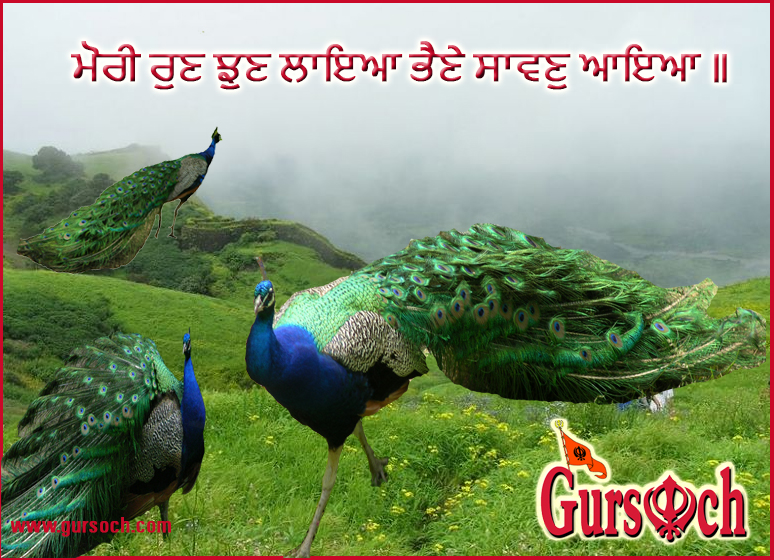
peacocks are singing

ਮੋਰੀ ਰੁਣ ਝੁਣ ਲਾਇਆ ਭੈਣੇ ਸਾਵਣੁ ਆਇਆ ॥
Moree Run Jhun Laeia Bhainae Savan Aeia ||
मोरी रुण झुण लाइआ भैणे सावणु आइआ ॥
Oh Sister! The rainy season of Sawan (name of the month) has come and the peacocks are singing sweetly.

ਵਡਹੰਸੁ ਮਹਲਾ 1 ਘਰੁ 2 ॥

ਮੋਰੀ ਰੁਣ ਝੁਣ ਲਾਇਆ ਭੈਣੇ ਸਾਵਣੁ ਆਇਆ ॥ 

ਤੇਰੇ ਮੁੰਧ ਕਟਾਰੇ ਜੇਵਡਾ ਤਿਨਿ ਲੋਭੀ ਲੋਭ ਲੁਭਾਇਆ ॥ 

ਤੇਰੇ ਦਰਸਨ ਵਿਟਹੁ ਖੰਨੀਐ ਵੰਞਾ ਤੇਰੇ ਨਾਮ ਵਿਟਹੁ ਕੁਰਬਾਣੋ ॥ 

ਜਾ ਤੂ ਤਾ ਮੈ ਮਾਣੁ ਕੀਆ ਹੈ ਤੁਧੁ ਬਿਨੁ ਕੇਹਾ ਮੇਰਾ ਮਾਣੋ ॥

Vad-hans mehlaa 1 ghar 2.

Moree run jhun laa-i-aa bhainay saavan aa-i-aa.

Tayray mundh kataaray jayvdaa tin lobhee lobh lubhaa-i-aa.

Tayray darsan vitahu khannee-ai vanjaa tayray naam vitahu kurbaano.

Jaa too taa mai maan kee-aa hai tudh bin kayhaa mayraa maano.

Raag Wadhans, the bani of First Nanak, house second.

In essence: Oh Sister! The rainy season of Sawan (name of the month) has come and the peacocks are singing sweetly. Oh Prabh! Your fascinating and sharp beauty has enticed your bride (It has inspired me to see you). I am ready to be cut into pieces to have your vision and I sacrifice to your Naam. If you are seen there (in this scene), I have felt proud; otherwise, without you, what honor I have?

                      First, the Guru creates a scene full with the presence of Prabh all around; then, he expresses how a seeker expresses about the fascinating Prabh and His creation. The Guru further expresses how His lover feels to sacrifice his life to Prabh. In the end, thanks are offered to Prabh, who has blessed the seeker to see Him eminently in His creation.

                            In the following stanza, a plight of the Creator’s devotee who is only into show off is expressed. Our any show wrapped in wrong intentions pushes us into hypocrisy. If the Creator is not envisioned, what is the use of such a show off? Talking about who is right or wrong will bring nothing to us, because in such pursuits we steer our minds away from Him. It is wastage of time and a big step away from the Creator. An analogy is taken of a husband and a wife. The wife gets ready for her husband; she decorates herself; she tries to become attractive, but if her husband doesn’t notice her, what is the use of her decoration? Implication is deep. If we remain in love with our selected choices and go to the Guru’s house, how can we express our true love toward our Guru and the Creator? All the hypocritical shows need to be abandoned. By feeling being in love with the Guru and the Creator, we should proceed to perform His devotion sincerely. The Guru is not only in the Gurdwara but also with us: within. We need to turn toward him by remembering what often he says to us. The Creator is not met only in the Gurdwara, but also within, because His presence is within and out as well. The Gurdwara creates environments that help us in falling in love truly with the Creator. Very important is to become spotless and to feel His presence. When that is done, a feeling of separation from Him overtakes our all negative pursuits; thus our love for Him commands us to become one with Him by overcoming our self-conceit, lust, greed, anger and attachment:

ਚੂੜਾ ਭੰਨੁ ਪਲੰਘ ਸਿਉ ਮੁੰਧੇ ਸਣੁ ਬਾਹੀ ਸਣੁ ਬਾਹਾ ॥

ਏਤੇ ਵੇਸ ਕਰੇਦੀਏ ਮੁੰਧੇ ਸਹੁ ਰਾਤੋ ਅਵਰਾਹਾ ॥

ਨਾ ਮਨੀਆਰੁ ਨ ਚੂੜੀਆ ਨਾ ਸੇ ਵੰਗੁੜੀਆਹਾ ॥

ਜੋ ਸਹ ਕੰਠਿ ਨ ਲਗੀਆ ਜਲਨੁ ਸਿ ਬਾਹੜੀਆਹਾ ॥

ਸਭਿ ਸਹੀਆ ਸਹੁ ਰਾਵਣਿ ਗਈਆ ਹਉ ਦਾਧੀ ਕੈ ਦਰਿ ਜਾਵਾ ॥

ਅੰਮਾਲੀ ਹਉ ਖਰੀ ਸੁਚਜੀ ਤੈ ਸਹ ਏਕਿ ਨ ਭਾਵਾ ॥

ਮਾਠਿ ਗੁੰਦਾਈ ਪਟੀਆ ਭਰੀਐ ਮਾਗ ਸੰਧੂਰੇ ॥

ਅਗੈ ਗਈ ਨ ਮੰਨੀਆ ਮਰਉ ਵਿਸੂਰਿ ਵਿਸੂਰੇ ॥

Choorhaa bhann palangh si-o mundhay san baahee san baahaa.

Aytay vays karaydee-ay mundhay saho raato avraahaa.

Naa manee-aar na choorhee-aa naa say vangoorhee-aahaa.

Jo sah kanth na lagee-aa jalan se bahrhee-aahaa.

Sabh sahee-aa saho raavan ga-ee-aa ha-o daadhee kai dar jaavaa.

Ammaalee ha-o kharee suchjee tai sah ayk na bhaavaa.

Maath gundaa-een patee-aa bharee-ai maag sandhooray.

Agai ga-ee na mannee-aa mara-o visoor visooray.

(SGGS-557,558)

In essence: (now a reaction about the feelings of Prabh’s separation is expressed; please bear in mind that it is done only when one is in love with Him) Oh bride! What is the use of your decoration if your Spouse is not with you? Break your coach along with its arms and your arms as well. These bracelet and bangles are of no use if your arms cannot embrace your Spouse (Prabh)? Let such arms be burned. All my friends have come to enjoy the company of the Spouse (Prabh), but where should I, an unfortunate one, go? Oh friend! I think that I am virtuous, but none of my virtues pleases my Spouse. I have decorated myself by weaving my hair into braids and applying vermillion in my partings (I have done all religious rites and also I have worn religious garbs), but my Beloved does not accept me. Obviously I shall die in anguish.

                           It is horrible for us to claim to be Prabh’s devotees without ever doing serious efforts to know Him. What is the use of our acts (done as His devotees), which fail to take us out of miseries and let us die bit-by-bit everyday? If He is known, one enjoys stable bliss before which millions of dominos become insignificant (44, SGGS). Burn such religious dresses! Burn such claims!  The Guru asks us to feel for Him. Yes feel for Him and start experiencing Him within always. Lucky are those, who are with Him; unlucky are we who wash away with the waves of the worldly pleasure.

                          In the following verses, the Guru points out how we are lost in the worldly Maya pursuits forgetting Him. That is the reason no feeling of separation from Him ever develops in us. We are enjoying the worldly pleasure; we are busy in them; therefore, we don’t feel for changing, which can enable us to live in His love truly and to envision Him. With a feeling of His presence within, don’t we become a part of Him? If in reality we feel to be His part, we should become one with Him tearing away every wall that comes between us. Akalpurakh is not a deity we can worship Him as a toy. His infinity and presence in all separates Him from all the worldly established gods. The Guru says:  people seeing my plight show empathy toward me but my own body, which remains happy in the worldly pleasures. In other words, the body doesn’t feel separation from Him; instead it is happy like a child enjoys its toys. The desire to see Him still glows within; actually it is Him who puts it in us. We cannot talk to Him as we do with other people. If we talk, it will be one-way talking only. The true talking to Him, even though it may be one-way talk, is to do His praise.  In Japji (2), it is explicitly stated through which language Akalpurakh gets engaged. It is the language of love. We cannot send our message to Him that can express how our desire to see Him remains immaterialized. The Gurbani states that He knows everything (72, SGGS); therefore, we need not to call Him loudly. If He knows us well, still we feel to communicate with Him, don’t we?  Second Nanak says that we need different eyes to see Him ( SGGS,139 ). Once we do what the Guru says, we start communicating with Him and our all demands end. Then only the most beautiful demand is left to have blessing of understanding His Ordinance. If that desires is fulfilled, everything becomes beautiful (142 SGGS). When He is felt within, outside becomes our own. That feeling cannot develop in us as long as we are carried away by the Maya attractions. The virtues like compassion, contentment, empathy, kindness, humility and forgiveness shine within us as He is felt in our hearts. In this pursuit, our self-conceit and anger first need to go forever. Living without Him is not worth anything. Living without feeling His presence all over pushes us into dark realms in which we live as slaves of our negative forces.

ਮੈ ਰੋਵੰਦੀ ਸਭੁ ਜਗੁ ਰੁਨਾ ਰੁੰਨੜੇ ਵਣਹੁ ਪੰਖੇਰੂ ॥

ਇਕੁ ਨ ਰੁਨਾ ਮੇਰੇ ਤਨ ਕਾ ਬਿਰਹਾ ਜਿਨਿ ਹਉ ਪਿਰਹੁ ਵਿਛੋੜੀ ॥

ਸੁਪਨੈ ਆਇਆ ਭੀ ਗਇਆ ਮੈ ਜਲੁ ਭਰਿਆ ਰੋਇ ॥

ਆਇ ਨ ਸਕਾ ਤੁਝ ਕਨਿ ਪਿਆਰੇ ਭੇਜਿ ਨ ਸਕਾ ਕੋਇ ॥

ਆਉ ਸਭਾਗੀ ਨੀਦੜੀਏ ਮਤੁ ਸਹੁ ਦੇਖਾ ਸੋਇ ॥

ਤੈ ਸਾਹਿਬ ਕੀ ਬਾਤ ਜਿ ਆਖੈ ਕਹੁ ਨਾਨਕ ਕਿਆ ਦੀਜੈ ॥

ਸੀਸੁ ਵਢੇ ਕਰਿ ਬੈਸਣੁ ਦੀਜੈ ਵਿਣੁ ਸਿਰ ਸੇਵ ਕਰੀਜੈ ॥

ਕਿਉ ਨ ਮਰੀਜੈ ਜੀਅੜਾ ਨ ਦੀਜੈ ਜਾ ਸਹੁ ਭਇਆ ਵਿਡਾਣਾ ॥1॥3॥

Mai rovandee sabh jag runaa runnrhay vanhu pankhayroo.

Ik na runaa mayray tan kaa birhaa jin ha-o pirahu vichhorhee.

Supnai aa-i-aa bhee ga-i-aa mai jal bhari-aa ro-ay.

Aa-ay na sakaa tujh kan pi-aaray bhayj na sakaa ko-ay.

Aa-o sabhaagee needrhee-ay mat saho daykhaa so-ay.

Tai saahib kee baat je aakhai kaho naanak ki-aa deejai.

Sees vadhay kar baisan deejai vin sir sayv kareejai.

Ki-o na mareejai jee-arhaa na deejai jaa saho bha-i-aa vidaanaa. ||1||3||

In essence: As I cry, the entire world cries with me (takes pity on me), so do the birds of the forest. Only my sense of bodily separation is not crying (having this body-separation from Prabh doesn’t bother me) because of which I am separated from my Spouse. My Prabh Spouse came into my dream and went away; so I cried many tears. Oh my beloved! I can neither come to you, nor can I send anyone to you. Oh auspicious sleep! Please come to me so that I can see my spouse. Oh Nanak! What should be offered to that person, who gives me the message of my Master? (Answer) I would cut my head off and give to him to sit on it, and without my head, I shall serve him (means in utter humility I shall serve that person like a slave). If our Spouse becomes stranger, shouldn’t we die? Why shouldn’t we sacrifice ourselves to Him (to get Him back)? 

                         Why loving Him is not limited to doing virtuous deeds only? Answer is in the way the Guru expresses his feelings for Him. In the following verses, please note that it is the same feeling of love in depth expressed in the above shabda. The feeling of separation from the Creator must be our asset as the Guru expresses on 94, SGGS

ਹਰਿ ਹਰਿ ਸਜਣੁ ਮੇਰਾ ਪ੍ਰੀਤਮੁ ਰਾਇਆ ॥

ਕੋਈ ਆਣਿ ਮਿਲਾਵੈ ਮੇਰੇ ਪ੍ਰਾਣ ਜੀਵਾਇਆ ॥ 

ਹਉ ਰਹਿ ਨ ਸਕਾ ਬਿਨੁ ਦੇਖੇ ਪ੍ਰੀਤਮਾ ਮੈ ਨੀਰੁ ਵਹੇ ਵਹਿ ਚਲੈ ਜੀਉ ॥3॥

Har har sajan mayraa pareetam raa-i-aa.  

Ko-ee aan milaavai mayray paraan jeevaa-i-aa.

Ha-o reh na sakaa bin daykhay pareetamaa mai neer vahay veh chalai jee-o.  ||3||

Har is my friend and my beloved king. I want someone to help me to meet with Him, who is the rejuvenator of my life. I cannot live without envisioning my beloved Har, and the tears are falling from my eyes (in the feeling of separation).

                    And, on 244-245, SGGS, the Guru in a nutshell expresses the same strong desire to see Akalpurakh; while feeling His separation passionately, he concludes that when He is realized, one’s oneness with Him becomes stable forever; it makes you cry if you happen to be in love with the Creator:

ਮਿਲੁ ਮੇਰੇ ਪ੍ਰੀਤਮਾ ਜੀਉ ਤੁਧੁ ਬਿਨੁ ਖਰੀ ਨਿਮਾਣੀ ॥

ਮੈ ਨੈਣੀ ਨੀਦ ਨ ਆਵੈ ਜੀਉ ਭਾਵੈ ਅੰਨੁ ਨ ਪਾਣੀ ॥

ਪਾਣੀ ਅੰਨੁ ਨ ਭਾਵੈ ਮਰੀਐ ਹਾਵੈ ਬਿਨੁ ਪਿਰ ਕਿਉ ਸੁਖੁ ਪਾਈਐ ॥

 ਗੁਰ ਆਗੈ ਕਰਉ ਬਿਨੰਤੀ ਜੇ ਗੁਰ ਭਾਵੈ ਜਿਉ ਮਿਲੈ ਤਿਵੈ ਮਿਲਾਈਐ ॥

ਆਪੇ ਮੇਲਿ ਲਏ ਸੁਖਦਾਤਾ ਆਪਿ ਮਿਲਿਆ ਘਰਿ ਆਏ ॥

ਨਾਨਕ ਕਾਮਣਿ ਸਦਾ ਸੁਹਾਗਣਿ ਨਾ ਪਿਰੁ ਮਰੈ ਨ ਜਾਏ ॥4॥2॥

Mil mayray pareetamaa jee-o tudh bin kharee nimaanee.

Mai nainee need na aavai jee-o bhaavai ann na paanee.

Paanee ann na bhaavai maree-ai haavai bin pir ki-o sukh paa-ee-ai.

Gur aagai kara-o binantee jay gur bhaavai ji-o milai tivai milaa-ee-ai.

Aapay mayl la-ay sukhdaata aap mili-aa ghar aa-ay.

Naanak kaaman sadaa suhaagan naa pir marai na jaa-ay. ||4||2||

In essence: Oh my Beloved! Meet me; without you I am utterly nothing. Without you, I don’t feel for asleep, food, and water. I am in sorrow because of being separated from you, my spouse. Yes, I don’t feel for food and water. How can I have peace without you? I pray to the Guru. If it pleases you, unite me with my Beloved. The peace giving Prabh unites the soul-bride with Him and He comes to her mind to meet. Oh Nanak! The bride, to whom Prabh unites with Him, has Him (her spouse) forever, because He doesn’t separate from her or die. 

                          Definitely He will come to manifest in us if we change. Certainly His light will guide us if we change. Certainly we will learn how to be in love with Him truly if we change. Yes if we change, we will enter into a realm that cannot be expressed. All help is within us if we listen to the Guru and realize how deeply our Guru has felt for Him in this shabda. Life devoted to Him is not merely to give away in charity, helping people and speaking sweetly to others; doubtlessly, such virtues become only aiding-instruments to get drenched in His love, but experiencing Him is beyond that.

 Regards,

G Singh 

Living In The Memory Of Our Creator

To tread on a path, we need very clear instructions. If someone says: this world is a projection of your mind and you see what your mind projects; otherwise, it doesn’t exist; will we realize that? We may never comprehend it actually, because we don’t only feel this world, but we also touch it and verify its existence. We have developed adherence to its existence.  We need to bring a change in ourselves in the same way we have been programmed in our environments. The Guru doesn’t take us to such kind of ambiguous and intricate routes; instead, he advises us to overcome our self-conceit that hinders every spiritual phenomenon we seek to experience; the second, he asks us to become detached. Now this is very hard to understand if we are not guided to understand how to do it. The Guru addresses that issue by asking us to live here as a guest, who lives at another’s place without getting attached to anything. After getting over our self-conceit and attachment, the Guru asks us to concentrate on our Creator, who is defined as a permeating power all over in and out.Thus, the path is crystal clear, and to realize it, we must follow what the Guru says. Let us start understanding how our Guru guides us: Third Nanak first puts a few questions then answers them, which are very helpful for our spiritual journey; please read on 1048: 

ਮਾਰੂ ਮਹਲਾ ੩ ॥

Maaroo mehlaa 3. 

ਕਿਸੁ ਸੇਵੀ ਤੈ ਕਿਸੁ ਸਾਲਾਹੀ ॥

Kis sayvee tai kis saalaahee.

ਸਤਿਗੁਰੁ ਸੇਵੀ ਸਬਦਿ ਸਾਲਾਹੀ ॥

Satgur sayvee sabad saalaahee.

ਸਚੈ ਸਬਦਿ ਸਦਾ ਮਤਿ ਊਤਮ ਅੰਤਰਿ ਕਮਲੁ ਪ੍ਰਗਾਸੀ ਹੇ ॥੩॥

Sachai sabad sadaa mat ootam antar kamal pargaasee hay. ||3||

Raag Maroo, the bani of Third Nanak

In essence: (Questions)To whom should I serve and to whom should I praise?(Answers) Serve (follow) the Satiguru and through his shabda, praise Akalpurakh. One’s intellect becomes sublime and one’s lotus-mind blossoms through praising Him (Akalpurakh). 

               And again stress is given on the same idea:

ਹਰਿ ਨਾਮੁ ਚੇਤਾ ਅਵਰੁ ਨ ਪੂਜਾ ॥

Har naam chaytaa avar na poojaa.

ਏਕੋ ਸੇਵੀ ਅਵਰੁ ਨ ਦੂਜਾ ॥

Ayko sayvee avar na doojaa.

ਪੂਰੈ ਗੁਰਿ ਸਭੁ ਸਚੁ ਦਿਖਾਇਆ ਸਚੈ ਨਾਮਿ ਨਿਵਾਸੀ ਹੇ ॥੭॥

Poorai gur sabh sach dikhaa-i-aa sachai naam nivaasee hay. ||7|| 

In essence: I remember Prabh’s Naam and I do not worship anyone one other.I serve none but only Prabh, the perfect Guru has shown me Prabh and I abide in His Naam. 

               Abiding in His Naam is not simple; to reach to that state, the Guru guides us. Following the Guru and worshipping the Creator is actually a journey to realize the Creator within. In this context, the Guru also says on 1028: 

ਸਤਿਗੁਰ ਮਿਲਹੁ ਚੀਨਹੁ ਬਿਧਿ ਸਾਈ ॥

Satgur milhu cheenahu bidh saa-ee.

ਜਿਤੁ ਪ੍ਰਭੁ ਪਾਵਹੁ ਗਣਤ ਨ ਕਾਈ ॥

Jit parabh paavhu ganat na kaa-ee.

ਹਉਮੈ ਮਾਰਿ ਕਰਹੁ ਗੁਰ ਸੇਵਾ ਜਨ ਨਾਨਕ ਹਰਿ ਰੰਗਿ ਭੀਨਾ ਹੇ ॥੧੭॥੨॥੮॥

Ha-umai maar karahu gur sayvaa jan naanak har rang bheenaa hay. ||17||2||8|| 

In essence: Brother! You meet the Satiguru and ask the way out to meet Har. When you obtain Har, there will be no account of your deeds. By eliminating your self-conceit, serve the Guru (follow the Guru’s advice strictly in utter humility). Oh Nanak! This way, one gets drenched in Har’s love. 

               The following Slok of Fifth Nanak states that merely talking doesn’t help; please read on 1100

ਮਃ ੫ ॥

Mehlaa 5.

ਸਜਣ ਸਚੁ ਪਰਖਿ ਮੁਖਿ ਅਲਾਵਣੁ ਥੋਥਰਾ ॥

Sajan sach parakh mukh alaavan thothraa.

ਮੰਨ ਮਝਾਹੂ ਲਖਿ ਤੁਧਹੁ ਦੂਰਿ ਨ ਸੁ ਪਿਰੀ ॥੩॥

Man majhaahoo lakh tudhhu door na so piree. ||3|| 

 In essence: Oh friend! Realize Prabh’s Naam in your heart, because merely talking about it is useless.Look Him within; your beloved Spouse is not far away. 

               The Guru is not saying that “don’t utter His Naam”, but instead he is saying that His Naam should be uttered heartily; making “His Naam uttering” a ritual is criticized in the Gurbani. Without sincerity, all efforts done in context of realizing Him are literally useless. 

               Look at the following verses on 1030, SGGS; you will see more clarity about searching Him within:

 ਮਾਰੂ ਮਹਲਾ ੧ ॥

Maaroo mehlaa 1.

ਘਰਿ ਰਹੁ ਰੇ ਮਨ ਮੁਗਧ ਇਆਨੇ ॥

Ghar rahu ray man mugadh i-aanay.

ਰਾਮੁ ਜਪਹੁ ਅੰਤਰਗਤਿ ਧਿਆਨੇ ॥

Raam japahu antargat Dhi-aanay.

ਲਾਲਚ ਛੋਡਿ ਰਚਹੁ ਅਪਰੰਪਰਿ ਇਉ ਪਾਵਹੁ ਮੁਕਤਿ ਦੁਆਰਾ ਹੇ ॥੧॥

Laalach chhod rachahu aprampar i-o paavhu mukat du-aaraa hay. ||1||

Raag Maroo, the bani of First Nanak

In essence: Oh silly and childish mind! Be stilled within and utter Prabh’s name internally. Give up all greed and get drenched in the love of Prabh, who is infinite; this way, the salvation is achieved. 

               To do that, we need some personal advice of the Guru; in other words, we need to know how to get ready to become an apt follower of the Guru? Answer is on 1041. SGGS:

ਮਾਰੂ ਮਹਲਾ ੧ ॥

Maaroo mehlaa 1.

ਕਾਮੁ ਕ੍ਰੋਧੁ ਪਰਹਰੁ ਪਰ ਨਿੰਦਾ ॥

Kaam krodh parhar par nindaa.

ਲਬੁ ਲੋਭੁ ਤਜਿ ਹੋਹੁ ਨਿਚਿੰਦਾ ॥

Lab lobh taj hohu nichindaa.

ਭ੍ਰਮ ਕਾ ਸੰਗਲੁ ਤੋੜਿ ਨਿਰਾਲਾ ਹਰਿ ਅੰਤਰਿ ਹਰਿ ਰਸੁ ਪਾਇਆ ॥੧॥

Bharam kaa sangal torh niraalaa har antar har ras paa-i-aa. ||1|| 

Raag Maroo, the bani of First Nanak 

In essence: Give up your lust, anger and slandering of others; abandon your greed and possessiveness to become worry free. One, who breaks the chains of doubt, becomes detached and finds Har’s Naam-essence within. 

               Once, we complete our self analysis and reform ourselves, we are right on a track; we are heading toward the ultimate freedom by shattering our each and every bond, but always bear in mind that we are supposed to live here as guests not owners, please see on 1188 to 1189: 

ਗੁਰ ਤੇ ਸਮਝਿ ਰਹੈ ਮਿਹਮਾਣੁ ॥

Gur tay samajh rahai mihmaan.

ਹਰਿ ਰਸਿ ਰਾਤਾ ਜਨੁ ਪਰਵਾਣੁ ॥੭॥

Har ras raataa jan parvaan. ||7||

 In essence: A person, who understands Prabh and lives here like a guest as per the Guru’s advice, remains drenched in His love and becomes acceptable to Him. 

               Now let us go to Bhagat Namdev to know how to practice our concentration on our Creator; he gives many examples in this context; here is his shabda on 972, SGGS 

ਆਨੀਲੇ ਕਾਗਦੁ ਕਾਟੀਲੇ ਗੂਡੀ ਆਕਾਸ ਮਧੇ ਭਰਮੀਅਲੇ ॥

Aaneelay kaagad kaateelay goodee aakaas madhay bharmee-alay.

ਪੰਚ ਜਨਾ ਸਿਉ ਬਾਤ ਬਤਊਆ ਚੀਤੁ ਸੁ ਡੋਰੀ ਰਾਖੀਅਲੇ ॥੧॥

Panch janaa si-o baat bata-oo-aa cheet so doree raakhee-alay. ||1|| 

In essence: Look! A boy brings paper, cuts it and makes a kite; then he flies it in the sky: he keeps talking with his companions, but his mind remains fixed on the string of the kite;

ਮਨੁ ਰਾਮ ਨਾਮਾ ਬੇਧੀਅਲੇ ॥ 

Man raam naamaa baydhee-alay.

ਜੈਸੇ ਕਨਿਕ ਕਲਾ ਚਿਤੁ ਮਾਂਡੀਅਲੇ ॥੧॥ ਰਹਾਉ ॥

Jaisay kanik kalaa chit maandee-alay. ||1|| rahaa-o. 

Namdev’s mind is pierced with Akalpurakh’s name as the goldsmith keeps his attention on gold-crafting while talking with others. Pause. 

ਆਨੀਲੇ ਕੁੰਭੁ ਭਰਾਈਲੇ ਊਦਕ ਰਾਜ ਕੁਆਰਿ ਪੁਰੰਦਰੀਏ ॥ 

Aaneelay kumbh bharaa-eelay oodak raaj ku-aar purandree-ay.

ਹਸਤ ਬਿਨੋਦ ਬੀਚਾਰ ਕਰਤੀ ਹੈ ਚੀਤੁ ਸੁ ਗਾਗਰਿ ਰਾਖੀਅਲੇ ॥੨॥

Hasat binod beechaar kartee hai cheet so gaagar raakhee-alay. ||2|| 

The young girls go outside the city and fill their pitchers with water; they laugh and talk and make merry, but they keep their minds in their pitchers (Namdev remembers His Prabh in the same way). 

ਮੰਦਰੁ ਏਕੁ ਦੁਆਰ ਦਸ ਜਾ ਕੇ ਗਊ ਚਰਾਵਨ ਛਾਡੀਅਲੇ ॥ 

Mandar ayk du-aar das jaa kay ga-oo charaavan chhaadee-alay.

ਪਾਂਚ ਕੋਸ ਪਰ ਗਊ ਚਰਾਵਤ ਚੀਤੁ ਸੁ ਬਛਰਾ ਰਾਖੀਅਲੇ ॥੩॥

Paanch kos par ga-oo charaavat cheet so bachhraa raakhee-alay. ||3|| 

Here is a house with ten gates; a man let loose the cows to graze. The Cows graze five miles away, but they keep their hearts fixed on their calves (in the same way Namdev remembers Him). 

ਕਹਤ ਨਾਮਦੇਉ ਸੁਨਹੁ ਤਿਲੋਚਨ ਬਾਲਕੁ ਪਾਲਨ ਪਉਢੀਅਲੇ ॥ 

Kahat naamday-o sunhu tilochan baalak paalan pa-udhee-alay.

ਅੰਤਰਿ ਬਾਹਰਿ ਕਾਜ ਬਿਰੂਧੀ ਚੀਤੁ ਸੁ ਬਾਰਿਕ ਰਾਖੀਅਲੇ ॥੪॥੧॥

Antar baahar kaaj biroodhee cheet so baarik raakhee-alay. ||4||1|| 

Namdev says : listen oh Tirlochan! The mother lays the child in the cradle and she remains busy working in and outside the house, but she keeps her thoughts in her child (in the same way, Namdev remembers Him). 

               Once our minds start concentrating on Akalpurakh’s memory, we will never be disturbed by any desire or worldly attractions, because we will learn how to live with Him while living in this world, which is highly dominated by the Maya influences. We will not feel separate from Him ever; therefore, no duality will exist in us. No need to put marks on the forehead or chanting special mantras, because living in His Naam will become our necessary mantra; then we don’t need to look for auspicious days or time either. As His world runs, we will align with His all pervading ordinance perfectly. It eventually leads us to that state of void in which no difference is seen between our Creator and us. We will be living desire free while performing our assigned jobs. We will eat, share, laugh but deep in our minds, a settled thought of resistance to incessant desiring will glow all the time. The world is perfect. When our duality sets in, it becomes calamitous. If we keep mixing our thoughts or keep applying our self-made tricks in this regard, we may please some people, but our spiritual experience will doom at its inception.Our attention fixed on our Creator unfolds our freedom, which we unknowingly wrapped in bonds. Our minds fixed on Him become stilled, though the wind of worldly affairs keeps blowing.

Wishes

Regards

 G Singh


A Seeker’s Readiness And Eagerness

I have met my many Sikh brothers and sisters who are very eager to discuss about Akalpurakh or the Gurus, but I have never felt a glowing urge to envision Him in any of them. They are more into discussing how they are right and others are wrong. They tell me how we should preach our religion or why our Sikh youth lacks devotion toward our faith or why corrupt preachers or the members of SGPC have betrayed the Guru? Not a single of them ever shared with me how seriously he or she feels to envision the Creator. I haven’t met any, who can say that the Guru’s path is clear and he or she is working on it. Most of the time, our intellectual thinking is seen dominating all of us; therefore, still I am in search of such Gursikh of my community, who has seen the glowing light within and become detached. It doesn’t mean that I am better than they are; instead they are far better than I am. My point is to share with my Sikh brothers and sisters that our Guru has written so much to help us, but why we fail to follow our Guru? I have been searching in this regard for a while without any success. I want to know or meet that Gursikh who lives not as the society commands or his or her own way of thinking demands, but who has realized the envisioning the Creator and changed his or her entire game of life. Today I am going to share with all of you the Guru’s those shabdas through which he expresses how he feels eagerly to have the very experience First Nanak expresses through his bani. Fifth Nanak has written these shabdas for us, because he is not a seeker but an achiever. These shabdas of his may infuse within us that longing once he had. Here are those shabda:

ਜੈਤਸਰੀ ਮਹਲਾ ੫ ਘਰੁ ੩ ਦੁਪਦੇ

Jaithasaree Mehala 5 Ghar 3 Dhupadhae

Raag Jaitasri, The Bani of FifthNanak, house third: Dupde

ੴ ਸਤਿਗੁਰ ਪ੍ਰਸਾਦਿ ॥

Ik Oankar Sathigur Prasadh ||

There is only One All-PervadingAkalpurakh, who is known with the blessings of the Satiguru.

ਦੇਹੁ ਸੰਦੇਸਰੋ ਕਹੀਅਉ ਪ੍ਰਿਅ ਕਹੀਅਉ ॥ 

ਬਿਸਮੁ ਭਈ ਮੈ ਬਹੁ ਬਿਧਿ ਸੁਨਤੇ ਕਹਹੁ ਸੁਹਾਗਨਿ ਸਹੀਅਉ ॥੧॥ ਰਹਾਉ ॥

Dhaehu Sandhaesaro Keheeao Pria Keheeao ||

Bisam Bhee Mai Bahu Bidhh Sunathae Kehahu Suhagan Seheeao ||1|| Rehao ||

In essence: Oh Fortunate friends! Tell me something about my beloved Prabh; I am amazed to hear many sorts of His accounts; say something about Him. Pause.

               Kindly reread it; it is a persuasion toward the ultimate goal of life by inviting those seekers, who talk about our source, Ekankaar. Please bear in mind that it is a talk or a thought that leads to unbelievable realms.

ਕੋ ਕਹਤੋ ਸਭ ਬਾਹਰਿ ਬਾਹਰਿ ਕੋ ਕਹਤੋ ਸਭ ਮਹੀਅਉ ॥

ਬਰਨੁ ਨ ਦੀਸੈ ਚਿਹਨੁ ਨ ਲਖੀਐ ਸੁਹਾਗਨਿ ਸਾਤਿ ਬੁਝਹੀਅਉ ॥੧॥

Ko Kehatho Sabh Bahar Bahar Ko Kehatho Sabh Meheeao ||

Baran N Dheesai Chihan N Lakheeai Suhagan Sath Bujheheeao ||1||

Some people say that my beloved Har is beyond all, but some say that He is within all. His color is invisible and His features are inexpressible. Oh fortunate soul-brides! Tell me the truth.

               The believers have different kind of ideas about the Creator and they express their ideas. Well, if one shares with others, only then it is possible to seek Him in utter sincerity, or to correct one’s thoughts in case any correction is needed. Now, having experienced the Creator, the Guru shares his experience with us. He doesn’t show us stating that Akalpurakh is right there with such and such form; nonetheless, he locates Him for us and tells us about His virtues.

Answer:

ਸਰਬ ਨਿਵਾਸੀ ਘਟਿ ਘਟਿ ਵਾਸੀ ਲੇਪੁ ਨਹੀ ਅਲਪਹੀਅਉ ॥

ਨਾਨਕੁ ਕਹਤ ਸੁਨਹੁ ਰੇ ਲੋਗਾ ਸੰਤ ਰਸਨ ਕੋ ਬਸਹੀਅਉ ॥੨॥੧॥੨॥

Sarab Nivasee Ghatt Ghatt Vasee Laep Nehee Alapeheeao ||

Naanak Kehath Sunahu Rae Loga Santh Rasan Ko Baseheeao ||2||1||2|| 

Nanak says: listen oh people! Akalpurakh dwells on the tongues of the Sants; He is all pervading; He abides in everyone, but He is attached to none; He is immaculate.

                As we read this shabda, we can see the love of the Guru for the Creator over flowing; he desires Him and then feels Him. First, the Guru just puts some questions about the experience of the Creator, but then he gives answers: the Creator, being detached, is indeed present in all; however, it is only His true devotees, who remain attached to Him by remembering Him always; in other simple words, they live in his memory. If you want to see Him go to the one who has realized Him (as I am trying); only then, you will see Him right on their tongues. Indeed, He is felt through His praise. If you don’t see such a devotee, as I haven’t,you just utter His name in His love; once you do that, you will feel Him as I have if not see Him. Indeed, He is very much present within us, but we lack that state of mind in which He is seen manifested clearly. We are too busy in our other pursuits to realize Him; nonetheless, it is His sants (the true lovers) who are only inclined toward Him and they are not bound by any kind of relation, things and entanglements though they work, support their families and share what they have with others. It is a thin line to cross; you may fall many times as I have, but the Guru suggests us to continue struggling to obtain our goal.

               Then in the next shabda, the Guru elaborates the plight of the sants in other words how they feel about Him; please read on 

ਜੈਤਸਰੀ ਮਃ ੫ ॥ 

ਧੀਰਉ ਸੁਨਿ ਧੀਰਉ ਪ੍ਰਭ ਕਉ ॥੧॥ ਰਹਾਉ ॥

Jaithasaree Ma 5 || 

Dhheero Sun Dhheero Prabh Ko ||1|| Rehaao ||

Raag Jaitari, the Bani of Fifth Nanak.

In essence: Hearing about Prabh, I am calmed and soothed. Pause.

               Just hearing about the Creator can still the mercurial mind; you see the miracle-aspect of His memory. As calm sets within, our own wisdom goes out of window and His presence within glows as a guiding force. In my case, as I try to go there, a storm of my created entanglements soars to hit my concentration on Him.The Guru advises us that without reluctance, we should sacrifice everything in His love:

ਜੀਅ ਪ੍ਰਾਨ ਮਨੁ ਤਨੁ ਸਭੁ ਅਰਪਉ ਨੀਰਉ ਪੇਖਿ ਪ੍ਰਭ ਕਉ ਨੀਰਉ ॥੧॥

Jeea Praan Man Than Sabh Arapo Neero Paekh Prabh Ko Neero ||1||

 Beholding Prabh very close, I offer to Him my soul, body and everything.

Now question we need to ask ourselves is: do we?

ਬੇਸੁਮਾਰ ਬੇਅੰਤੁ ਬਡ ਦਾਤਾ ਮਨਹਿ ਗਹੀਰਉ ਪੇਖਿ ਪ੍ਰਭ ਕਉ ॥੨॥

Baesumaar Baeanth Badd Dhaathaa Manehi Geheero Paekh Prabh Ko ||2||

Prabh is great, infinite and greatly beneficent. By beholding Him, I keep Him in my heart.

               Everything we have is His; we are just trustees of all we have; remember a trustee doesn’t own the things under a trust. In ownership comes conceit, but ownership doesn’t exist when His memory exists in the heart. As long as I feel like a trustee, I remain in smiles. Just remembering Him alone satiates us fully:

ਜੋ ਚਾਹਉ ਸੋਈ ਸੋਈ ਪਾਵਉ ਆਸਾ ਮਨਸਾ ਪੂਰਉ ਜਪਿ ਪ੍ਰਭ ਕਉ ॥੩॥

Jo Chaaho Soee Soee Paavo Aasaa Manasaa Pooro Jap Prabh Ko ||3||

By uttering Prabh’s Naam, I get what I want; my wishes are fulfilled. 

ਗੁਰ ਪ੍ਰਸਾਦਿ ਨਾਨਕ ਮਨਿ ਵਸਿਆ ਦੂਖਿ ਨ ਕਬਹੂ ਝੂਰਉ ਬੁਝਿ ਪ੍ਰਭ ਕਉ ॥੪॥੨॥੩॥

Gur Prasaadh Naanak Man Vasiaa Dhookh N Kabehoo Jhooro Bujh Prabh Ko ||4||2||3||

Oh Nanak! With the grace of the Guru, Prabh abides in my mind; now through His understanding, I do not regret in distress.

               As the Guru says that by remaining aware of His presence, He is felt all over, but there is one obstacle, and that is to enable the mind to envision Him with the Guru’s grace. The Guru has already explained and guided us toward Him. Hasn’t the Guru graced us? The Guru has graced us, but we haven’t made ourselves qualified to envision Him, because we don’t do what our Guru says, period.No change, no gain. Please read the next shabda and see how after eagerness of envisioning the Creator, one needs to change totally:

 ਸੂਹੀ ਮਹਲਾ ੫ ॥

ਉਮਕਿਓ ਹੀਉ ਮਿਲਨ ਪ੍ਰਭ ਤਾਈ ॥

ਖੋਜਤ ਚਰਿਓ ਦੇਖਉ ਪ੍ਰਿਅ ਜਾਈ ॥

ਸੁਨਤ ਸਦੇਸਰੋ ਪ੍ਰਿਅ ਗ੍ਰਿਹਿ ਸੇਜ ਵਿਛਾਈ ॥

ਭ੍ਰਮਿ ਭ੍ਰਮਿ ਆਇਓ ਤਉ ਨਦਰਿ ਨ ਪਾਈ ॥੧॥

Soohee Mehalaa 5 ||

Oumakiou Heeo Milan Prabh Thaaee ||

Khojath Chariou Dhaekho Pria Jaaee ||

Sunath Sadhaesaro Pria Grihi Saej Vishhaaee ||

Bhram Bhram Aaeiou Tho Nadhar N Paaee ||1||

Raag Soohi, the bani of Fifth Nanak.

In essence: My mind is excited to meet Prabh. I have left for searching to see my dear Spouse. Hearing the message of my beloved, I have prepared the coach of my heart for my spouse. I have been wandering for a long time, but now I have come back. I haven’t obtained Prabh’sgrace.

               First, one needs to get ready by forsaking any concern about what others will say or what other theories are being discussed about Him. The Guru says in the next shabda that Akalpurakh is always awake, but it is we who remain asleep in the Maya slumber. In other words, we don’t remain aware of His presence in us or around, because we are not truly in love with Him. We need to wake up by forsaking the Maya pursuits we are over occupied with. Remember, our minds are always in planning mode. It doesn’t mean we need to abandon our efforts to make our living. The Guru wants us to be ready for Him by eliminating our conceit, anger, greed, attachment and jealousy by keeping His memory always in our minds. If someone has achieved more than us with less efforts, so what? Why to be jealous? If someone has betrayed us, it is not our fall but the betrayer’s who falls for such deception.If we fail in our goal, so what? Other people also fail; besides, worrying about the failure doesn’t change anything. By remembering our Crestor, we need to negate the negativity that keeps sprouting within us as we forget Him. For this, we must look for the Guru’s congregation, where Akalpurakh is praised and talked about. The Guru‘s congregation is the environment we need, and we must break away from our programmed pursuits.  Let us first make it clear what isa true congregation of the Guru, because it is not what we often see in the Gurdawaras these days.  In there, if you see our brothers and sisters are sitting and enjoying the melody of the Guru- shabda, you are at right place. If they are busy in telling what have they established, or what they own, or they are simply talking, obviously their minds have not been over taken by the melody of the shabda and it is better to run away from there.  What environment we truly need, First Nanak defines it on 72, SGGS:

ਸਤਸੰਗਤਿ ਕੈਸੀ ਜਾਣੀਐ ॥
ਜਿਥੈ ਏਕੋ ਨਾਮੁ ਵਖਾਣੀਐ ॥
ਏਕੋ ਨਾਮੁ ਹੁਕਮੁ ਹੈ ਨਾਨਕ ਸਤਿਗੁਰਿ ਦੀਆ ਬੁਝਾਇ ਜੀਉ ॥੫॥

Sathasangath Kaisee Jaaneeai ||

Jithhai Eaeko Naam Vakhaaneeai ||

Eaeko Naam Hukam Hai Naanak Sathigur Dheeaa Bujhaae Jeeo ||5|| 

In essence: What is satsangat? (The answer) A congregation where only Akalpurakh’sNaamis uttered (A place where He is praised and remembered) Oh Nanak! The order of Akalpurakh is to praise His Naam only, and the Satiguru has given this understanding. 

               By getting imbued with Akalpurakh’s praise in His love, we should try to change. Make sure, the one of you, who came to the Guru’s house, is changed at the time of your returning home. Counsel yourself through the Guru’s words and deem the rest of wisdom futile for you. I assure you, in future, you will not like to be the one you used to be before coming to the Guru’s house. The Guru says in the following that it is because of His absence in our lives that our minds don’t procure peace: 

ਕਿਨ ਬਿਧਿ ਹੀਅਰੋ ਧੀਰੈ ਨਿਮਾਨੋ ॥
ਮਿਲੁ ਸਾਜਨ ਹਉ ਤੁਝੁ ਕੁਰਬਾਨੋ ॥੧॥ ਰਹਾਉ ॥

Kin Bidhh Heearo Dhheerai Nimaano ||

Mil Saajan Ho Thujh Kurabaano ||1|| Rehaao || 

Oh my beloved! Come and meet me. I sacrifice to you. Without you, how can my heart be consoled? Pause.

               In the following verses, the Guru encourages us to realize that our Creator is always ready to meet us, but we remain in the Maya slumber. Yes, if He wills, we can awake from the Maya slumber; in other words, Akalpurakh’s grace is mandatory. His grace comes for our sincerity.

ਏਕਾ ਸੇਜ ਵਿਛੀ ਧਨ ਕੰਤਾ ॥
ਧਨ ਸੂਤੀ ਪਿਰੁ ਸਦ ਜਾਗੰਤਾ ॥
ਪੀਓ ਮਦਰੋ ਧਨ ਮਤਵੰਤਾ ॥
ਧਨ ਜਾਗੈ ਜੇ ਪਿਰੁ ਬੋਲੰਤਾ ॥੨॥

Eaekaa Saej Vishhee Dhhan Kanthaa ||

Dhhan Soothee Pir Sadh Jaaganthaa ||

Peeou Madharo Dhhan Mathavanthaa ||

Dhhan Jaagai Jae Pir Bolanthaa ||2|| 

In the heart of the bride, there is only one coach for her and her groom,Prabh;however, the bride is in slumber and her Spouse is always awake. The bride can only be awakened if her Groom gives her a call.

               His grace comes with our sincerity and prayers. Now the Guru prays for us, who are fallen: 

ਭਈ ਨਿਰਾਸੀ ਬਹੁਤੁ ਦਿਨ ਲਾਗੇ ॥

ਦੇਸ ਦਿਸੰਤਰ ਮੈ ਸਗਲੇ ਝਾਗੇ ॥

ਖਿਨੁ ਰਹਨੁ ਨ ਪਾਵਉ ਬਿਨੁ ਪਗ ਪਾਗੇ ॥

ਹੋਇ ਕ੍ਰਿਪਾਲੁ ਪ੍ਰਭ ਮਿਲਹ ਸਭਾਗੇ ॥੩॥

Bhee Niraasee Bahuth Dhin Laagae ||

Dhaes Dhisanthar Mai Sagalae Jhaagae ||

Khin Rehan N Paavo Bin Pag Paagae ||

Hoe Kirapaal Prabh Mileh Sabhaagae ||3|| 

In wait, many days have been passed and I, His bride, have become sad. I have wandered through all lands. I cannot live without falling on the feet of my Spouse Prabh. If He bestows kindness, He will meet me and I shall become fortunate.

               As our Creator graces us, He creates occasions for us to be a part of  “ਸਤਸੰਗਤਿ/Satsangat” :

ਭਇਓ ਕ੍ਰਿਪਾਲੁ ਸਤਸੰਗਿ ਮਿਲਾਇਆ ॥

ਬੂਝੀ ਤਪਤਿ ਘਰਹਿ ਪਿਰੁ ਪਾਇਆ ॥

ਸਗਲ ਸੀਗਾਰ ਹੁਣਿ ਮੁਝਹਿ ਸੁਹਾਇਆ ॥

ਕਹੁ ਨਾਨਕ ਗੁਰਿ ਭਰਮੁ ਚੁਕਾਇਆ ॥੪॥

Bhaeiou Kirapaal Sathasang Milaaeiaa ||

Boojhee Thapath Gharehi Pir Paaeiaa ||

Sagal Seegaar Hun Mujhehi Suhaaeiaa ||

Kahu Naanak Gur Bharam Chukaaeiaa ||4||

My Prabh Spouse has shown mercy and He has united me with His devotees. In the company of His devotees, my thirst to see Him is quenched and I have found my Spouse Akalpurakh within. Now all my decorations look beautiful on me. Nanak utter this: the Guru has dispelled my doubt.

               The Guru starts with a strong longing of beholding Akalpurakh; he expresses the devotees’ failed efforts without Hisgrace. Eventually, the Guru expresses that when Akalpurakhgraces, His devotee finds Him within through the Guru. Once He is realized within, He is seen all over:

ਜਹ ਦੇਖਾ ਤਹ ਪਿਰੁ ਹੈ ਭਾਈ ॥

ਖੋਲ੍ਹ੍ਹਿਓ ਕਪਾਟੁ ਤਾ ਮਨੁ ਠਹਰਾਈ ॥੧॥ ਰਹਾਉ ਦੂਜਾ ॥੫॥

Jeh Dhaekhaa Theh Pir Hai Bhaaee ||

Kholihou Kapaatt Thaa Man Theharaaee ||1|| Rehaao Dhoojaa ||5||

(737 to 738, SGGS) 

Oh brother! Now, wherever I look, I see my Spouse. The Guru has opened the closed door of my mind and my mind is stilled within. Pause. Second. 

               In the above verses, the Guru explains how one feels after experiencing the Creator. It should be our ultimate goal of life. We are in duality and His oneness we cannot behold. Slow and steady, we need to tread on our Guru’s path with a strong urge to materialize this goal. We all have flaws, but we are also blessed with power to overcome them. Everything is within us: our flaws, virtues and our Creator’s presence. We just need to decide what we want. If we want to hold something, we need to extend our hands; we need to work for that; otherwise, we are what we are and we will die as what we are without experiencing our ultimate goal. Kindly don’t stop your efforts after listening to a melodious shabdas ever; instead, let that shabda become your guiding force in changing you and imprinting the Creator’s soothing memory in your heart.

Regards

Gurdeep Singh

The Mundane Affairs And The Reality Of The Spiritual Realm

Today – a time of reason – is overtaken by fears that have triggered superstitious beliefs; today, more people are practicing nonsensical rites than ever. It  appears that people are in fear and they are trying to please any entity having a reputation of ‘hearsay miracles”” without using their brains. First Nanak, the founder of a way of life named Sikhi, which leads his followers away from superstitious beliefs, stresses repeatedly that indulgence in mundane affairs along with hearsay miracles only becomes a cause of miseries here and hereafter. He pities the plight of the Pathan-rulers incontext of Mughal Babur’s invasion; it is on 417-18, SGGS:

ਕੋਟੀ ਹੂ ਪੀਰ ਵਰਜਿ ਰਹਾਏ ਜਾ ਮੀਰੁ ਸੁਣਿਆ ਧਾਇਆ 

ਥਾਨ ਮੁਕਾਮ ਜਲੇ ਬਿਜ ਮੰਦਰ ਮੁਛਿ ਮੁਛਿ ਕੁਇਰ ਰੁਲਾਇਆ 

ਕੋਈ ਮੁਗਲੁ ਨ ਹੋਆ ਅੰਧਾ ਕਿਨੈ ਨ ਪਰਚਾ ਲਾਇਆ ॥੪॥

Kotee hoo peer varaj rahaa-ay jaa meer suni-aa Dhaa-i-aa.

Thaan mukaam jalay bij mandar muchh muchh ku-ir rulaa-i-aa.

Ko-ee mugal na ho-aa andhaa kinai na parchaa laa-i-aa. ||4||

In essence: On hearing of the invasion of Mir Babur, the Pathan rulers summoned religious leaders to halt him with magic tricks, but all their strongly built places and mansions were burnt down and the princes were cut into pieces. Because of the magic, no Mughal got blinded (as the men of miracle claimed) and no miracle occurred (in this regard).

              What Pathan rulers did? They took refuge in the miracles of Peers instead of realizing their duty beforehand. Black magic was placed in force. Their acts were pitiable and laughable. The History of India was changed once for all, because they didn’t remain aware of any outside threat. Tenth Nanak obviously was inspired by First Nanak to create Khalsa so that the followers could also learn how to face cruel suppression like this without giving in.

                 First Nanak has taken reason and logic as strong weapons to defuse imaginative illusions, but he has also said that the existence of the Creator and hereafter realms are beyond logic, reason and description; we can try to explain but how can we verify the indescribable?

ਕਿਆ ਹਉ ਕਥੀ ਕਥੇ ਕਥਿ ਦੇਖਾ ਮੈ ਅਕਥੁ ਨ ਕਥਨਾ ਜਾਈ 

ਜੋ ਤੁਧੁ ਭਾਵੈ ਸੋਈ ਆਖਾ ਤਿਲੁ ਤੇਰੀ ਵਡਿਆਈ ॥੩॥

ki-aa ha-o kathee kathay kath daykhaa mai akath na kathnaa jaa-ee.

jo tuDh bhaavai so-ee aakhaa til tayree vadi-aa-ee. ||3|| (795, SGGS)   

 Oh my inexpressible Prabh! I cannot express your virtues! When I try to do so, I come to know that you are inexpressible; therefore, I cannot express you. I say what pleases you (as per your “will”), but it is an iota of your greatness I have expressed.

                 Many of his Sikhs don’t believe in “hereafter scenario” though he clearly states that. They are too much influenced by the discoveries of science, which tells only that which can be verified. Unfortunately, we have no affirmation of the Creator’s existence, but we believe in His existence doubtlessly. Do we need science to start believing in Him or we will follow our faith in Him without the science? Science has not explained each and every phenomena of nature. According to First Nanak, life doesn’t end here; he also says that actually there is no death; what is seen in this context is nothing but an end of a thing that is bound to perish; on 152, SGGS, First Nanak makes it clear that actually death occurs to the body only: 

ਹਉ ਨ ਮੂਆ ਮੇਰੀ ਮੁਈ ਬਲਾਇ ॥ ਓਹੁ ਨ ਮੂਆ ਜੋ ਰਹਿਆ ਸਮਾਇ 

ਕਹੁ ਨਾਨਕ ਗੁਰਿ ਬ੍ਰਹਮੁ ਦਿਖਾਇਆ ॥ ਮਰਤਾ ਜਾਤਾ ਨਦਰਿ ਨ ਆਇਆ ॥੪॥੪॥

Ha-o na moo-aa mayree mu-ee balaa-ay.  Oh na moo-aa jo rahi-aa samaa-ay.

Kaho naanak gur barahm dikhaa-i-aa. Martaa jaataa nadar na aa-i-aa.  ||4||4||

In essence: Nanak says this: The Guru has shown me Akalpurakh, and I don’t see anyone dying or going. I understand that it is the calamitous conceit (in the body) that has died not I, the soul. Akalpurakh (that part of the soul that exists in all), who pervades all, doesn’t die either.

                 Finally I have learned that there is no use of debating with those people, who don’t believe in “after death” scenario but believe in the existence of the Creator throwing their hyper rationality out of the window. Only difference between them and me is that I have refused to turn a deaf ear toward the crystal clear sayings of the Guru. Below I will share this with those, who are still interested to go beyond the unknown and indescribable.

                 First look how First Nanak kicks away the so much loved stuff by the world. Why does he do so? If we read between the lines what he is trying to say, we can conclude that without living in the memory of our Creator, we lack that what is very beneficial to us: for our peace of mind and worry-free lives. 

ਸਲੋਕ ਮਃ ੧ ॥ 
ਸਰਮੁ ਧਰਮੁ ਦੁਇ ਨਾਨਕਾ ਜੇ ਧਨੁ ਪਲੈ ਪਾਇ ॥ ਸੋ ਧਨੁ ਮਿਤ੍ਰੁ ਨ ਕਾਂਢੀਐ ਜਿਤੁ ਸਿਰਿ ਚੋਟਾਂ ਖਾਇ 
ਜਿਨ ਕੈ ਪਲੈ ਧਨੁ ਵਸੈ ਤਿਨ ਕਾ ਨਾਉ ਫਕੀਰ ॥ ਜਿਨ੍ਹ੍ਹ ਕੈ ਹਿਰਦੈ ਤੂ ਵਸਹਿ ਤੇ ਨਰ ਗੁਣੀ ਗਹੀਰ ॥੧॥

Salok mėhlā 1.  

Saram ḏẖaram ḏu▫e nānkā je ḏẖan palai pā▫e.    

So ḏẖan miṯar na kāʼndẖī▫ai jiṯ sir cẖotāʼn kẖā▫e.  

Jin kai palai ḏẖan vasai ṯin kā nā▫o fakīr.    

Jinĥ kai hirḏai ṯū vasėh ṯe nar guṇī gahīr. ||1||      (1287, SGGS) 

The Slok of First Nanak

In essence:  Oh Nanak! Many believe that if one has wealth, one can perform Dharma right way, but wealth cannot be considered a friend; actually one suffers because of it. Those persons, who have wealth, should be called paupers actually. Oh Akalpurakh! Those, in whose hearts you dwell, are like the deep ocean of virtues.

                 Those people who claim to be one of the richest people in the world are very poor according to First Nanak. How will anyone believe in it with a reason? Only then one believes this when one realizes that a rich mandeparts this world taking nothing with him as all do, and add to his deficiency, he hasn’t obtained the other wealth, the Naam-wealth. Those, who don’t believe that the Naam-wealth is taken with as the time comes to depart from here, will never understand First Nanak. Just to share with you how they become lazy to search deep into what the Guru says; for example: very loudly they proclaim that First Nanak says,” Truthful living is above all” as they read this: 

ਮਨਹਠ ਬੁਧੀ ਕੇਤੀਆ ਕੇਤੇ ਬੇਦ ਬੀਚਾਰ ॥ 

ਕੇਤੇ ਬੰਧਨ ਜੀਅ ਕੇ ਗੁਰਮੁਖਿ ਮੋਖ ਦੁਆਰ ॥ ਸਚਹੁ ਓਰੈ ਸਭੁ ਕੋ ਉਪਰਿ ਸਚੁ ਆਚਾਰੁ ॥੫॥

Manhath budhee kaytee-aa kaytay bayd beechaar.

Kaytay bandhan jee-a kay gurmukh mokhdu-aar.

Sachahu orai sabhko upar sach aachaar.  ||5||   (62, SGGS)

In essence: There are many persons of stubborn intellect and there are contemplations of the Vedas. There are so many entanglements for the soul, but it is only through the Guru that the door of liberation is obtained. All techniques are below Prabh, but remembering Prabh is above all.

                 In the above verses, “Sach” is used for Prabh and “ਆਚਾਰੁ  achaar” for His praise; many people interpret it (ਆਚਾਰੁ  achaar) as “truthful living”, but as per the Guru’s advice, there is nothing above contemplating Naam including good deeds. Please look at 1222, SGGS: 

ਸ੍ਰਵਣੀ ਕੀਰਤਨੁ ਸਿਮਰਨੁ ਸੁਆਮੀ ਇਹੁ ਸਾਧ ਕੋ ਆਚਾਰੁ    


Sarvanee keertan simran su-aamee ih saadh ko aachaar.   {SGGS-1222} 

To hear Prabh’s praise and to do His praise is the character of His devotee. 

      Besides, had First Nanak considered “ਆਚਾਰੁ achaar”above all, why would he say, “through ਆਚਾਰੁ, Akalpurakh is not realized” on 355:

ਆਚਾਰੀ ਨਹੀ ਜੀਤਿਆ ਜਾਇ ॥ ਪਾਠ ਪੜੈ ਨਹੀ ਕੀਮਤਿ ਪਾਇ 

ਅਸਟ ਦਸੀ ਚਹੁ ਭੇਦੁ ਨ ਪਾਇਆ 

ਨਾਨਕ ਸਤਿਗੁਰਿ ਬ੍ਰਹਮੁ ਦਿਖਾਇਆ ॥੫॥੨੦॥ 

Aachaaree nahee jeeti-aa jaa-ay. 

Paathparhai nahee keemat paa-ay.

Asat dasee chahu bhaydna paa-i-aa. 

Naanak satgur barahm dikhaa-i-aa. ||5||20|| 

Obviously the Guru first gives reference to the practice of penances, the Vedas and their discussion; then he says that these acts are below the act of remembering the Creator’s name. This is all about the Naam-wealth.

             What is the Naam-wealth? It is a different issue, which needs a lot of pages to explain; however, in simple words, it can be explained like this: while living in this world, when a person, while performing all his or her due duties, becomes detached in the memory of the Creator, he or she also procures the Naam-wealth. Living in His memory gives us what we cannot buy with the worldly wealth.  What is that? It is a chance to be one with Him while alive; it is an ultimate experience and ecstasy. 

               In the below Slok, the Guru details the story of the mortal who becomes indulgent in the mundane affairs forgetting the source of his origin, the Creator: 

ਮਃ ੧ ॥ 
ਦੁਖੀ ਦੁਨੀ ਸਹੇੜੀਐ ਜਾਇ ਤ ਲਗਹਿ ਦੁਖ ॥ 

ਨਾਨਕ ਸਚੇ ਨਾਮ ਬਿਨੁ ਕਿਸੈ ਨ ਲਥੀ ਭੁਖ 
ਰੂਪੀ ਭੁਖ ਨ ਉਤਰੈ ਜਾਂ ਦੇਖਾਂ ਤਾਂ ਭੁਖ ॥ 

ਜੇਤੇ ਰਸ ਸਰੀਰ ਕੇ ਤੇਤੇ ਲਗਹਿ ਦੁਖ ॥੨॥
 Mėhlā 1.  

Ḏukẖīḏunī saheṛī▫ai jā▫e ṯa lagėh ḏukẖ.   

Nānak sacẖe nām bin kisai na lathī bẖukẖ.  

Rūpī bẖukẖna uṯrai jāʼnḏekẖāʼnṯāʼn bẖukẖ.    

Jeṯe ras sarīr ke ṯeṯe lagėh ḏukẖ. ||2||    (1287, SGGS)

The bani of First Nanak

 In essence: By going through pain, one gathers wealth and it gives pain when it is gone. Oh Nanak! Without Har’s Naam, no one is satiated. Beholding beauty, one is not satiated, because one’s urge to see it more and more increases. The more pleasures the body enjoys, the more pains cling to it.

                  Have we ever seen a person saying,” I have everything; I am fully satisfied and I don’t need anything more; now I will not be upset ever on anything?” If someone says so, we know that such a statement cannot be true. What is missing then? The same, “the Naam-wealth”, but our over indulgence in the worldly wealth and affairs negates our belief that to have the true wealth is living in His memory. The Guru says that living here should beas a guest visits to his relatives or friends; nothing more that; because we don’t see that way, we fail to understand our Guru. Please see the following verses on 350, SGGS 

ਮਾਣਸ ਮੂਰਤਿ ਨਾਨਕੁ ਨਾਮੁ ॥ ਕਰਣੀ ਕੁਤਾ ਦਰਿ ਫੁਰਮਾਨੁ 
ਗੁਰ ਪਰਸਾਦਿ ਜਾਣੈ ਮਿਹਮਾਨੁ ॥ ਤਾ ਕਿਛੁ ਦਰਗਹ ਪਾਵੈ ਮਾਨੁ ॥੪॥੪॥

Maanas moorat naanak naam. Karnee kutaa dar furmaan.

Gur parsaad jaanai mihmaan. Taa kichhdargeh paavai maan. ||4||4||

In essence: Nanak says: the humans are humans only for name’s sake; actually their deeds are like of dogs, but they are under His ordinance. If a human being deems him or her as Prabh’s guest in this world, only then in His court, he or she can get some degree of honor.

                  We get confused about Tenth Nanak’s a given verification of living like a guest; he is often portrayed to be fully involved in the mundane affairs, but we never see how deeply he remained detached also though he proved it. Many historians failed to see that because of the veil of the worldly royal congregation he had to keep.  If one has to be a commander for the purpose of self-defense, one has to keep what he did, but internally he was totally detached; after he passed away, the Mughal emperor Bahadur Shah deemed his property as “the property of a Darvesh/detached”. The historians don’t see him pining for the stability of his followers even after loosing his everything and every relation. Tenth Nanak never overstepped the advice of First Nanak. It is all internal detachment that changes the behavior. A person can be very much wealthy and detached as well. Thus Tenth Nanak’s decisions he ever took proved that he was detached; indeed, he never stuck with the mundane affairs and his firm belief in internal detachment never faded away either. We are right in the middle of the Maya game; it is difficult to become detached, but it is not impossible. While performing our due duties, we can remain attached to our Creator; our attachment to Him will turn us into detached ones. Now see how First Nanak guides us to his spiritual realms:

ਮਃ ੧ 
ਅੰਧੀ ਕੰਮੀ ਅੰਧੁ ਮਨੁ ਮਨਿ ਅੰਧੈ ਤਨੁ ਅੰਧੁ ॥ 

ਚਿਕੜਿ ਲਾਇਐ ਕਿਆ ਥੀਐ ਜਾਂ ਤੁਟੈ ਪਥਰ ਬੰਧੁ 
ਬੰਧੁ ਤੁਟਾ ਬੇੜੀ ਨਹੀ ਨਾ ਤੁਲਹਾ ਨਾ ਹਾਥ 

 ਨਾਨਕ ਸਚੇ ਨਾਮ ਵਿਣੁ ਕੇਤੇ ਡੁਬੇ ਸਾਥ ॥੩॥

Mėhlā 1.

Anḏẖī kammī anḏẖ man man anḏẖai ṯan anḏẖ.    

Cẖikaṛ lā▫i▫ai ki▫ā thī▫ai jāʼnṯutai pathar banḏẖ.  

Banḏẖṯutā beṛī nahī nāṯulhā nā hāth.   

Nānak sacẖe nām viṇ keṯe dube sāth. ||3||      (1287, SGGS)

The bani of First Nanak

In essence: Doing blind (in ignorance) deeds brings darkness to the mind and the body becomes dark too (the body-organs inspire to do blind deeds more.). What can do a mud plastering when the cemented-dam caves in? (Here is the situation) The dam is broken, but there is no boat or raft to get saved from the soaring water (when one gives in to the worldly urges, a little bit control will not do any good; as one is into strong temptations, one is destined to get drowned in them without the Guru’s guidance) Oh Nanak! Without Akalpurakh’s Naam, many multitudes of persons have drowned. 

               Sometimes just for a show of, some people perform good deeds, or some just do good deeds as they feel, but it is not enough according to the Guru. Why? A little effort like this will not eradicate the influence of our indulgence in vice ridden desires and acts. We need our Guru, who can show us how to live in the world heavily affected by Maya.

               Through the next Slok, First Nanak tells us that all that stuff people take pride in is not helpful in the journey our souls take:

ਮਃ ੧ ॥ ਲਖ ਮਣ ਸੁਇਨਾ ਲਖ ਮਣ ਰੁਪਾ ਲਖ ਸਾਹਾ ਸਿਰਿ ਸਾਹ 
ਲਖ ਲਸਕਰ ਲਖ ਵਾਜੇ ਨੇਜੇ ਲਖੀ ਘੋੜੀ ਪਾਤਿਸਾਹ ॥ 

ਜਿਥੈ ਸਾਇਰੁ ਲੰਘਣਾ ਅਗਨਿ ਪਾਣੀ ਅਸਗਾਹ 
ਕੰਧੀ ਦਿਸਿ ਨ ਆਵਈ ਧਾਹੀ ਪਵੈ ਕਹਾਹ ॥ ਨਾਨਕ ਓਥੈ ਜਾਣੀਅਹਿ ਸਾਹ ਕੇਈ ਪਾਤਿਸਾਹ ॥੪॥ 

Mėhlā 1.   Lakẖ maṇ su▫inā lakẖ maṇ rupā lakẖ sāhā sir sāh.  

Lakẖ laskar lakẖ vāje neje lakẖī gẖoṛī pāṯisāh.  

 Jithai sā▫ir langẖ▫ṇā agan pāṇī asgāh.  

Kanḏẖīḏis naāvīḏẖāhī pavai kahāh.    

Nānak othai jāṇī▫ahi sāh ke▫ī pāṯisāh. ||4||  

The bani of First Nanak

In essence: One may have lacks monds (Punjabi weights) of gold and silver and one may be richer than lacks of rich people; a monarch may have lacks military, lacks of bands and lacks of spears-holders and horses; the path through the soul passes is like the unfathomable and deep ocean filled with fire and water, and on that path, no bank is in sight; there an uproar of lamentation is heard. Oh Nanak! There it will be judged, who is really rich or king.

             What is that through which the worldly monarchs and rich people pass? If it is a metaphoric expression, why there negation of wealth is pointed out? What is that place where the kings are not accepted as kings and the rich people are not considered rich? Here in this world, the people, who are rich, are considered rich and a king is considered a king. What the Guru is talking about then? Obviously, he is talking about here after scenario. If some people have difficulty to accept it, it doesn’t mean the Guru s not saying that.

               In the following Slokas, the Guru again stresses on worthless indulgence in the worldly wealth pursuits and the connected negative effects; he concludes that without remembering the Creator’s name, all is filth. 

ਸਲੋਕ ਮਃ ੧ ॥ ਰੂਪੈ ਕਾਮੈ ਦੋਸਤੀ ਭੁਖੈ ਸਾਦੈ ਗੰਢੁ 
ਲਬੈ ਮਾਲੈ ਘੁਲਿ ਮਿਲਿ ਮਿਚਲਿ ਊਂਘੈ ਸਉੜਿ ਪਲੰਘੁ 
ਭੰਉਕੈ ਕੋਪੁ ਖੁਆਰੁ ਹੋਇ ਫਕੜੁ ਪਿਟੇ ਅੰਧੁ ॥ ਚੁਪੈ ਚੰਗਾ ਨਾਨਕਾ ਵਿਣੁ ਨਾਵੈ ਮੁਹਿ ਗੰਧੁ ॥੧॥   

Salok mėhlā 1.  Rūpai kāmai ḏosṯī bẖukẖai sāḏai gandẖ.   

Labai mālai gẖul mil micẖal ūʼngẖai sa▫uṛ palangẖ.   

Bẖaʼnukai kop kẖu▫ār ho▫e fakaṛ pite anḏẖ.    

Cẖupai cẖanga nānkā viṇ nāvai muhi ganḏẖ. ||1||   (1288, SGGS) 

Slok of First Nanak

In essence: Beauty has friendship with lust; hunger has alliance with taste; the greedy one obtains wealth and gets in bed with it. A sleepy person considers a small place as an elegant bed. In anger one gets into miseries and speaks nonsense. Oh Nanak! It is better to be quiet, because mouth gets filthy without Prabh’s name (while living in His memory, one’s everything carries positivity).

            In the following, the Guru picks on regime, wealth, beauty, high caste and youth; he says: these ones take the world into illusions by taking it away from the loving Creator. Only through the Guru, one can negate their effect. 

ਮਃ ੧ ॥ ਰਾਜੁ ਮਾਲੁ ਰੂਪੁ ਜਾਤਿ ਜੋਬਨੁ ਪੰਜੇ ਠਗ ॥ ਏਨੀ ਠਗੀਂ ਜਗੁ ਠਗਿਆ ਕਿਨੈ ਨ ਰਖੀ ਲਜ ॥ 

ਏਨਾ ਠਗਨ੍ਹ੍ਹਿ ਠਗ ਸੇ ਜਿ ਗੁਰ ਕੀ ਪੈਰੀ ਪਾਹਿ ॥ ਨਾਨਕ ਕਰਮਾ ਬਾਹਰੇ ਹੋਰਿ ਕੇਤੇ ਮੁਠੇ ਜਾਹਿ ॥੨॥

Mėhlā 1.  Rāj māl rūp jāṯ joban panje ṯẖag.   

Ėnīṯẖagīʼn jag ṯẖagi▫ā kinai na rakẖī laj.   

Ėnāṯẖagniĥṯẖag se jė gur kī pairī pāhi.  

Nānak karmā bāhre hor keṯe muṯẖe jāhi. ||2||   (1288, SGGS) 

The bani of First Nanak

In essence: Regime, wealth, beauty, high caste, and youth, these all five are just like robbers. These five thugs have robbed the world (of virtues) and no one’s honor is spared. Those persons, who take refuge in the Guru, rob these fives (Because the Guru guides them to live in Akalpurakh’s memory while honoring His Will; then their pride in ruling, wealth, beauty, caste and youth totally disappears). Oh Nanak! Without good luck (provided by Akalpurakh) many others are being robbed by the five ones.

             Here is a declaration of First Nanak about these things: 

ਗਉੜੀ ਮਹਲਾ ੧ ॥ ਚੋਆ ਚੰਦਨੁ ਅੰਕਿ ਚੜਾਵਉ 
ਪਾਟ ਪਟੰਬਰ ਪਹਿਰਿ ਹਢਾਵਉ ॥ 

ਬਿਨੁ ਹਰਿ ਨਾਮ ਕਹਾ ਸੁਖੁ ਪਾਵਉ ॥੧॥
 Ga-orhee mehlaa 1. Cho-aa chandan ank charhaava-o.

Paat patambar pahir hadhaava-o.  

Bin har naam kahaa sukh paava-o. ||1||    (225, SGGS)

Raag Gaurhi, the baniof First Nanak.

In essence: Even if I apply perfume of Chandan and wear silky robes, I cannot obtain peace and comfort without Har’s Naam.

ਕਿਆ ਪਹਿਰਉ ਕਿਆ ਓਢਿ ਦਿਖਾਵਉ 

 ਬਿਨੁ ਜਗਦੀਸ ਕਹਾ ਸੁਖੁ ਪਾਵਉ ॥੧॥ ਰਹਾਉ 

Ki-aa pahira-o ki-aa odhdikhaava-o. 

Bin jagdees kahaa sukh paava-o. ||1|| rahaa-o.

What is should I wear to make a show? I cannot obtain peace and comfort without Har, the Master of the world. Pause.

ਕਾਨੀ ਕੁੰਡਲ ਗਲਿ ਮੋਤੀਅਨ ਕੀ ਮਾਲਾ ॥ 

ਲਾਲ ਨਿਹਾਲੀ ਫੂਲ ਗੁਲਾਲਾ ॥ ਬਿਨੁ ਜਗਦੀਸ ਕਹਾ ਸੁਖੁ ਭਾਲਾ ॥੨॥ 

Kaanee kundal gal motee-an kee maalaa.

Laal nihaalee fool gulaalaa. Bin jagdees kahaa sukhbhaalaa. ||2||

If I wear earrings and garland of pearls around my neck and if I keep flowers and red coverlet on the red mat, how can I obtain peace and comfort without Prabh, the Master of the world?

ਨੈਨ ਸਲੋਨੀ ਸੁੰਦਰ ਨਾਰੀ 
ਖੋੜ ਸੀਗਾਰ ਕਰੈ ਅਤਿ ਪਿਆਰੀ ॥  ਬਿਨੁ ਜਗਦੀਸ ਭਜੇ ਨਿਤ ਖੁਆਰੀ ॥੩॥

Nain salonee sundar naaree.

Khorh seegaar karai atpi-aaree.  Bin jagdees bhajay nitkhu-aaree. ||3||

(The Guru expresses the worldly attractions and the mortal’s indulgence in it withoutPrabh’s memory) Even if I have a beautiful wife, who has very attractive eyes and who decorates herself for me and loves me, but without remembering Prabh, the world Master, I will remain in miseries every day.

The idea of the Maya attraction continues:

ਦਰ ਘਰ ਮਹਲਾ ਸੇਜ ਸੁਖਾਲੀ 
ਅਹਿਨਿਸਿ ਫੂਲ ਬਿਛਾਵੈ ਮਾਲੀ ॥ ਬਿਨੁ ਹਰਿ ਨਾਮ ਸੁ ਦੇਹ ਦੁਖਾਲੀ ॥੪॥

Dar ghar mehlaa sayj sukhaalee. 

Ahinis fool bichhaavai maalee. Bin har naam so dayh dukhaalee. ||4||

To rest, if I have big comfortable houses and my luxurious bed is decorated everyday with flowers by a gardener, without Har’s Naam, my body still remains miserable.

ਹੈਵਰ ਗੈਵਰ ਨੇਜੇ ਵਾਜੇ 
ਲਸਕਰ ਨੇਬ ਖਵਾਸੀ ਪਾਜੇ ॥ ਬਿਨੁ ਜਗਦੀਸ ਝੂਠੇ ਦਿਵਾਜੇ ॥੫॥

Haivar gaivar nayjay vaajay.

Laskar nayb khavaasee paajay. Bin jagdees jhoothay divaajay. ||5||

If I have excellent horses, fine elephants, musical bands, armies, Naib, royal servants and ostentatious display, but these will be false a show without Akalpurakh.

ਸਿਧੁ ਕਹਾਵਉ ਰਿਧਿ ਸਿਧਿ ਬੁਲਾਵਉ 
ਤਾਜ ਕੁਲਹ ਸਿਰਿ ਛਤ੍ਰੁ ਬਨਾਵਉ ॥ ਬਿਨੁ ਜਗਦੀਸ ਕਹਾ ਸਚੁ ਪਾਵਉ ॥੬॥

Sidhkahaava-o ridh sidh bulaava-o.

Taaj kulah sir chhatar banaava-o. Bin jagdees kahaa sach paava-o. ||6||

If I were called a man of miracle with riches and supernatural powers and if I had a crown on my head and royal hat with royal umbrella, how could I obtain eternal stability without Prabh?

ਖਾਨੁ ਮਲੂਕੁ ਕਹਾਵਉ ਰਾਜਾ 
ਅਬੇ ਤਬੇ ਕੂੜੇ ਹੈ ਪਾਜਾ ॥ ਬਿਨੁ ਗੁਰ ਸਬਦ ਨ ਸਵਰਸਿ ਕਾਜਾ ॥੭॥

Khaan malook kahaava-o raajaa.

Abay tabay koorhay hai paajaa. Bin gur sabadna savras kaajaa. ||7||

If I am called an emperor, a lord or a King, and I treat my servants arrogantly, but all this show is destined to perish, because without the Guru’s shabda, my purpose of life is not accomplished.

ਹਉਮੈ ਮਮਤਾ ਗੁਰ ਸਬਦਿ ਵਿਸਾਰੀ 
ਗੁਰਮਤਿ ਜਾਨਿਆ ਰਿਦੈ ਮੁਰਾਰੀ ॥ ਪ੍ਰਣਵਤਿ ਨਾਨਕ ਸਰਣਿ ਤੁਮਾਰੀ ॥੮॥੧੦॥

Ha-umai mamtaa gur sabad visaaree.

Gurmat jaani-aa ridai muraaree. Paranvatnaanak sarantumaaree. ||8||10||

Humbly Nanak says: oh Akalpurakh! I am in your refuge. Through the Guru’s shabda, one’s conceit and infatuation are eradicated. Through the Guru, Prabh is recognized within the heart.

            The Guru advises his followers by giving examples of established truth in a society: he guides them how they can get attached to the Creator:

ਮਃ ੧ 
ਕੈਹਾ ਕੰਚਨੁ ਤੁਟੈ ਸਾਰੁ ॥ ਅਗਨੀ ਗੰਢੁ ਪਾਏ ਲੋਹਾਰੁ 
ਗੋਰੀ ਸੇਤੀ ਤੁਟੈ ਭਤਾਰੁ ॥  .ਪੁਤੀਗੰਢੁ ਪਵੈ ਸੰਸਾਰਿ 
ਰਾਜਾ ਮੰਗੈ ਦਿਤੈ ਗੰਢੁ ਪਾਇ ॥ ਭੁਖਿਆ ਗੰਢੁ ਪਵੈ ਜਾ ਖਾਇ 
ਕਾਲਾ ਗੰਢੁ ਨਦੀਆ ਮੀਹ ਝੋਲ ॥ ਗੰਢੁ ਪਰੀਤੀ ਮਿਠੇ ਬੋਲ 
ਬੇਦਾ ਗੰਢੁ ਬੋਲੇ ਸਚੁ ਕੋਇ ॥ ਮੁਇਆ ਗੰਢੁ ਨੇਕੀ ਸਤੁ ਹੋਇ 
ਏਤੁ ਗੰਢਿ ਵਰਤੈ ਸੰਸਾਰੁ ॥ ਮੂਰਖ ਗੰਢੁ ਪਵੈ ਮੁਹਿ ਮਾਰ 
ਨਾਨਕੁ ਆਖੈ ਏਹੁ ਬੀਚਾਰੁ ॥ ਸਿਫਤੀ ਗੰਢੁ ਪਵੈ ਦਰਬਾਰਿ ॥੨॥

Mehlaa 1.  

Kaihaa kanchan tutai saar.  Agnee gandh paa-ay lohaar.

Goree saytee tutai bhataar. Puteen gandhpavai sansaar.

Raajaa mangai ditai gandh paa-ay. Bhukhi-aa gandh pavai jaa khaa-ay.

Kaalaa gandh nadee-aa meeh jhol. Gandhpareetee mithay bol.

Baydaa gandh bolay sach ko-ay. Mu-i-aa gandh naykee sat ho-ay.  

Aytgandh vartai sansaar. Moorakhgandh pavai muhi maar.

Naanak aakhai ayhu beechaar. Siftee gandh pavai darbaar.||2||

First Nanak

In essence: When bronze, or gold or iron breaks, the smith welds it with fire. When husband and wife break away, through their son, their reconciliation is materialized because of their continuity of ancestry. When the king demands revenue, by giving it to him, a bond is established. Hungry person can keep relations if he gets something to eat. Relief from famine is obtained when the rivers run with heavy rain. Sweet words fortify the love. When one speaks the truth, one’s bond is built with religious scriptures. If a person does good deeds, after death, the world shows bond with him by remembering him. Such kinds of alliances prevail in the world. Fools are mended with punishment. Nanak expresses this fact that the bond with the Creator is made through praising Him. 

              On 469, the Guru indicates hereafter scenario; if one is bent upon distorting his words, what we can do, but he is very convincing that hereafter no caste or effect of riches carry  any weight, because there unlike these lives, which are programmed to give importance to riches, new ones are encountered:

ਮਃ ੧ 
ਵਦੀ ਸੁ ਵਜਗਿ ਨਾਨਕਾ ਸਚਾ ਵੇਖੈ ਸੋਇ ॥ ਸਭਨੀ ਛਾਲਾ ਮਾਰੀਆ ਕਰਤਾ ਕਰੇ ਸੁ ਹੋਇ 
ਅਗੈ ਜਾਤਿ ਨ ਜੋਰੁ ਹੈ ਅਗੈ ਜੀਉ ਨਵੇ ॥ ਜਿਨ ਕੀ ਲੇਖੈ ਪਤਿ ਪਵੈ ਚੰਗੇ ਸੇਈ ਕੇਇ ॥੩॥

Mehlaa 1.
Vadee so vajag naankaa sachaa vaykhai so-ay.

Sabhnee chhaalaa maaree-aa kartaa karay so ho-ay.

Agai jaatna jor hai agai jee-o navay.

Jin kee laykhai patpavai changay say-ee kay-ay. ||3||

Slok of First Nanak

In essence: Oh Nanak! What Prabh has ordained is going to occur and He watches all that.  All people jump in claiming what they will do, but it will happen what Akalpurakh, the Creator, wants. Hereafter, there is no caste and no one can exercise one’s power; there, the being has to deal with the new beings. Only those are good ones, who get honor according to the account (of deeds). 

              First Nanak makes his followers to remain aware how indulgence in Maya works negatively and how Akalpurakh’s love becomes support; this shabda is on 1331, SGGS:

ਪ੍ਰਭਾਤੀ ਮਹਲਾ ੧ ॥ ਖਾਇਆ ਮੈਲੁ ਵਧਾਇਆ ਪੈਧੈ ਘਰ ਕੀ ਹਾਣਿ 

ਬਕਿ ਬਕਿ ਵਾਦੁ ਚਲਾਇਆ ਬਿਨੁ ਨਾਵੈ ਬਿਖੁ ਜਾਣਿ ॥੧॥

Parbẖāṯī mėhlā 1.   Kẖā▫i▫ā mail vaḏẖā▫i▫ā paiḏẖai gẖar kī hāṇ.

Bak bak vāḏ cẖalā▫i▫ā bin nāvai bikẖ jāṇ. ||1||  

 Raag Parbhati, the bani of First Nanak

 In essence:  when one only eats and wears without remembering Prabh, one gathers filth and remains at loss. One argues and prattles; without His name, it is all nothing but poison.

 ਬਾਬਾ ਐਸਾ ਬਿਖਮ ਜਾਲਿ ਮਨੁ ਵਾਸਿਆ ॥ ਬਿਬਲੁ ਝਾਗਿ ਸਹਜਿ ਪਰਗਾਸਿਆ ॥੧॥ ਰਹਾਉ 

Bābā aisā bikẖam jāl man vāsi▫ā. Bibal jẖāg sahj pargāsi▫ā.||1|| rahā▫o.  

 Oh wise man! The mind gets caught in a difficult net. When one gets illuminated with Har’s grace, one ferries across the storm. Pause

 ਬਿਖੁ ਖਾਣਾ ਬਿਖੁ ਬੋਲਣਾ ਬਿਖੁ ਕੀ ਕਾਰ ਕਮਾਇ ॥ 

ਜਮ ਦਰਿ ਬਾਧੇ ਮਾਰੀਅਹਿ ਛੂਟਸਿ ਸਾਚੈ ਨਾਇ ॥੨॥

Bikẖ kẖāṇā bikẖ bolṇā bikẖ kī kār kamā▫e.   

Jam ḏar bāḏẖe mārī▫ah cẖẖūtas sācẖai nā▫e. ||2||  

One tastes the Maya poison and utters poisonous words; this way, one does the poisonous deeds. Such mortals are bound by the fear of death; only Har’s name can liberate them from it.

ਜਿਵ ਆਇਆ ਤਿਵ ਜਾਇਸੀ ਕੀਆ ਲਿਖਿ ਲੈ ਜਾਇ ॥ 

ਮਨਮੁਖਿ ਮੂਲੁ ਗਵਾਇਆ ਦਰਗਹ ਮਿਲੈ ਸਜਾਇ ॥੩॥

 Jiv ā▫i▫āṯiv jā▫isī kī▫ā likẖ lai jā▫e. 

Manmukẖ mūl gavā▫i▫āḏargėh milai sajā▫e. ||3||  

 As one comes with nothing, one goes with nothing, but one goes with an account of one’s deeds. Thus the mind-slave loses his capital and suffers in Akalpurakh’s court.

 ਜਗੁ ਖੋਟੌ ਸਚੁ ਨਿਰਮਲੌ ਗੁਰ ਸਬਦੀਂ ਵੀਚਾਰਿ 

 ਤੇ ਨਰ ਵਿਰਲੇ ਜਾਣੀਅਹਿ ਜਿਨ ਅੰਤਰਿ ਗਿਆਨੁ ਮੁਰਾਰਿ ॥੪॥ 

Jag kẖotou sacẖ nirmalou gur sabḏīʼn vīcẖār.  

Ŧe nar virle jāṇī▫ahi jin anṯar gi▫ān murār. ||4||   

The attachment of the world is unclean but Prabh is pure; through the Guru, one gets attached with Him. Those men, who have the divine knowledge, are rare.

 ਅਜਰੁ ਜਰੈ ਨੀਝਰੁ ਝਰੈ ਅਮਰ ਅਨੰਦ ਸਰੂਪ 

ਨਾਨਕੁ ਜਲ ਕੌ ਮੀਨੁ ਸੈ ਥੇ ਭਾਵੈ ਰਾਖਹੁ ਪ੍ਰੀਤਿ ॥੫॥੧੩॥ 

Ajar jarai nījẖar jẖarai amar anand sarūp.   

Nānak jal kou mīn sai the bẖāvai rākẖo parīṯ. ||5||13||   

When the mortal tolerates the unbearable, eternal bliss flows in him and he becomes the embodiment of happiness. Oh Akalpurakh! I, Nanak, long to have your love, as the fish loves water; bless me with your love. 

                    First Nanak doesn’t want us to become recluses; instead he wants us to live keeping our Creator’s memory in our hearts; he wants us to live as a guest, who doesn’t gets attached to the things he sees. Try to act like a guest and to think again and again about the Creator, you will experience unique feelings enveloping you within. The experience of anything is a result of efforts not talks.

Humbly,

G Singh